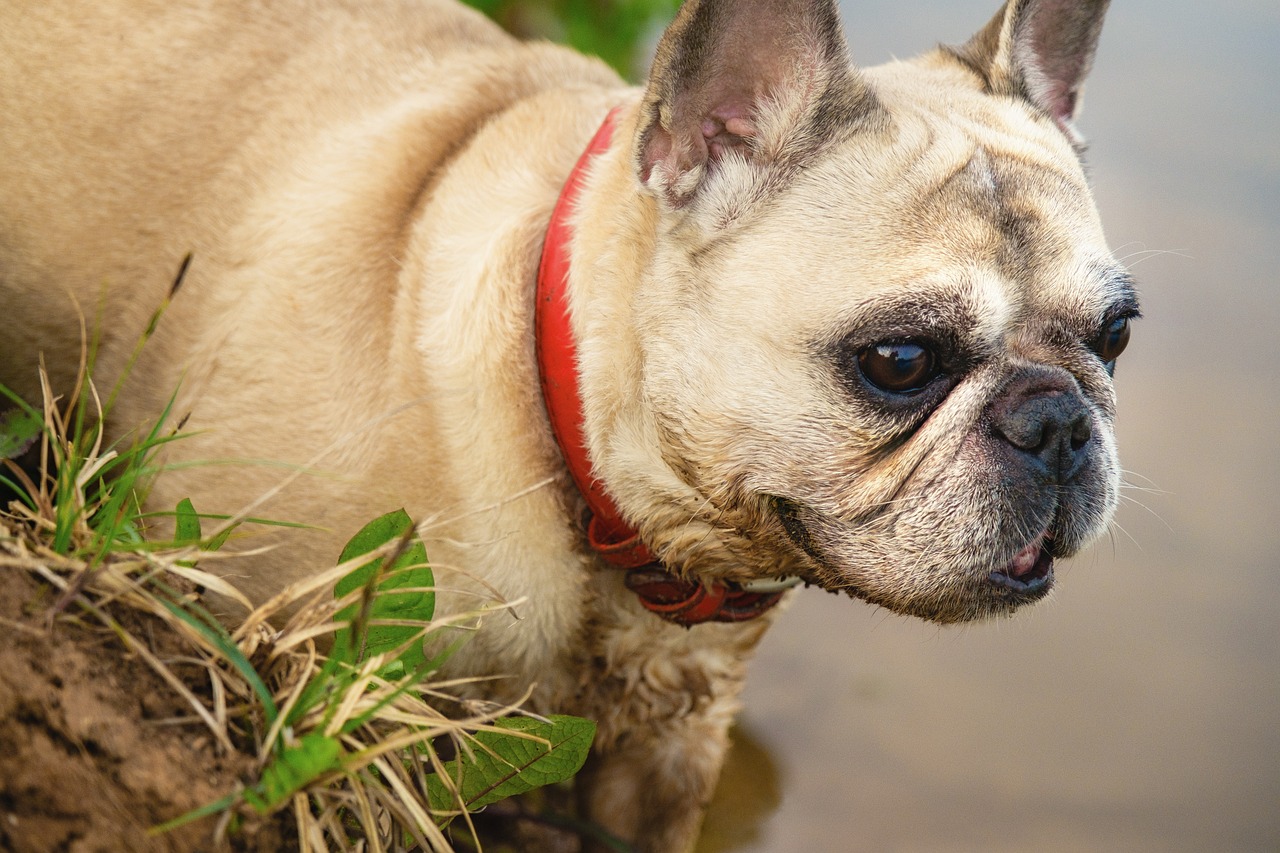
# Dog Potty Training for French Bulldogs: A Complete Guide
Potty training a French Bulldog means teaching them to eliminate outside or on a designated pad, using a consistent schedule, close supervision, and high-value rewards. It is not about dominance or punishment—it is about timing and positive reinforcement. Because Frenchies are smart but stubborn, you will need more patience and a better treat strategy than you would with a Golden Retriever.
This guide covers the entire process, from the first day home to handling setbacks, with specific advice for the breed’s flat face, heat sensitivity, and independent streak.
What Makes French Bulldogs Different for Potty Training?
French Bulldogs are not hard to potty train because they are unintelligent—they are hard to potty train because they are selectively deaf when they do not see an immediate payoff. They are companion dogs bred to be with you constantly, which means they may not want to go outside alone in bad weather or when you are not there. Their brachycephalic (flat-faced) anatomy also means they overheat quickly, so a mid-summer walk to the grass can be genuinely uncomfortable for them.
The good news: [French Bulldogs are famously food-motivated](https://pawsandwhiskerss.online/do-french-bulldogs-potty-train-well/). A piece of boiled chicken or a soft training treat will almost always override their stubbornness. You are not fighting a battle of wills; you are negotiating with a tiny, flat-faced food critic. Once they learn that peeing outside earns a jackpot reward, they will choose outside on their own—most of the time.
When Should I Start Potty Training My French Bulldog Puppy?
Start on day one, the moment your puppy comes home. Do not wait for them to settle in or for you to “have time.” The first 48 hours set the pattern for the next several months. Puppies under 12 weeks old have almost no bladder control; they will pee when they wake up, after eating, after playing, and every 45–60 minutes in between.
Here is a realistic schedule for an 8–12 week old Frenchie puppy:
| Time of Day | Action |
|---|
——–|
| 6:30 AM | Carry puppy outside immediately upon waking (no play first) |
|---|
Breakfast, then outside within 10 minutes |
| 9:00 AM | Outside break (after morning nap) |
|---|
Lunch, then outside within 10 minutes |
| 3:00 PM | Outside break (after afternoon nap) |
|---|
Dinner, then outside within 10 minutes |
| 7:00 PM | Outside break (after play session) |
|---|
Water up, final outside break |
| 10:30 PM | Crate for the night (expect one middle-of-night break until 12–14 weeks) |
Do not let a young Frenchie roam the house unsupervised. If you cannot watch them, they are in a crate or a small penned area with a potty pad. Every time they eliminate in the wrong spot, it is your fault for not supervising closely enough—not theirs.
How Often Should I Take My Frenchie Outside?
Take your French Bulldog out every 45–60 minutes during the day until they are 4 months old, then gradually extend to every 2–3 hours. After 6 months, most Frenchies can hold it for 4–5 hours during the day, but do not push it further—their small bladders and short necks do not make them good candidates for 8-hour stretches without a break.
Nighttime is different. An 8-week-old Frenchie will need a middle-of-the-night bathroom trip, usually around 2–3 AM. Set an alarm; do not wait for them to cry. If you wait for crying, you are teaching them that they must bark to get your attention. By 12–14 weeks, most Frenchies can sleep through the night without a break, provided they had a late-night potty and no water after 9 PM.
A critical breed note: French Bulldogs overheat easily. If it is over 80°F (27°C) outside, keep potty breaks short. Take them to a shaded spot, let them do their business, and go back inside. Do not turn potty time into a play session in the heat. If your Frenchie is panting heavily or seems reluctant to move, carry them back inside immediately.
What Is the Best Way to Handle Accidents?
Catch them in the act, interrupt, and redirect—do not punish. If you see your Frenchie starting to squat or circle, say a firm “No” or clap once to interrupt, then scoop them up and take them outside. When they finish outside, reward them heavily with treats and praise.
If you find an accident after the fact, do not rub their nose in it or scold them. French Bulldogs do not connect past punishment with the act of peeing on the floor. They only learn that you are scary and unpredictable. Clean the spot thoroughly with an enzymatic cleaner (like Nature’s Miracle) to remove the odor completely. If they can still smell their own urine, they will treat that spot as a legitimate bathroom.
One breed-specific tip: Frenchies are prone to skin fold infections, and urine left on the floor can be a slip hazard for their already delicate spines (they are prone to IVDD). Wipe up accidents immediately and dry the floor fully. This is not just about cleanliness—it is about protecting their joints and skin.
How Do I Handle My Frenchie’s Stubbornness During Potty Training?
Your Frenchie will test you. They may sit down and refuse to walk to the grass. They may pee on the mat right next to the door instead of going outside. They may fake a squat just to get a treat. This is not malice—it is a French Bulldog calculating whether the reward is worth the effort.
The solution is to make outside the most rewarding place in the world. Use high-value treats that your Frenchie only gets for pottying outside. Boiled chicken, freeze-dried liver, or small pieces of cheese work well. Give three or four treats, not one. Throw a tiny indoor party. If they are reluctant to go outside in cold or wet weather (very common in Frenchies), you need to make it quick and worth their while—and consider a dog coat or booties if the ground is freezing.
If your Frenchie is holding it in protest, do not engage in a staring contest. Walk them on a short leash to the same spot every time, give them 5 minutes, and if nothing happens, bring them back inside and crate them for 15 minutes. Then try again. They will learn that holding it does not earn freedom—only peeing outside does.
Should I Use Potty Pads or Go Straight to Outdoor Training?
This depends on your living situation and lifestyle. If you live in an apartment with no immediate outdoor access, potty pads are a reasonable starting point for a young puppy. If you have a yard, skip the pads entirely—they teach your Frenchie that peeing on soft surfaces indoors is acceptable, which can confuse them when they encounter rugs, bath mats, or your bed.
If you do use pads, place them in a consistent spot, ideally near the door you will use for outdoor breaks. Gradually move the pad closer to the door over a week, then move it outside. This “shifting” method works well for Frenchies because they are creatures of habit. However, be aware that some Frenchies never fully transition off pads, especially if they have learned to prefer them during cold weather. If you are committed to outdoor-only, do not offer pads at all.
For adult French Bulldogs adopted from rescues, pads may be a necessary temporary measure while they adjust to a new home. Give them 2–3 weeks of pad use, then begin the transition to outdoor-only.
What If My Frenchie Keeps Having Accidents at Night?
Nighttime accidents in a puppy under 12 weeks are normal. Set an alarm for 2–3 AM, take them out on a leash, keep it boring, and put them straight back in the crate. Do not play or talk much—you want them to learn that nighttime is for sleeping.
If your Frenchie is over 4 months old and still having nighttime accidents, check these factors:
- Water cutoff: Remove water at least 1 hour before bedtime.
- Last potty: Make sure their final potty break is truly empty. Wait 2–3 minutes after they pee to see if they produce more.
- Crate size: The crate should be just big enough for them to stand, turn around, and lie down. If it is too large, they will pee in one corner and sleep in the other.
- Medical issues: French Bulldogs are prone to urinary tract infections and bladder stones. If your Frenchie is [suddenly having accidents after being trained](https://pawsandwhiskerss.online/why-is-my-puppy-potty-training-regression/), or is drinking excessively, see a vet. This is general guidance, not medical advice—a persistent change in bathroom habits warrants a professional check.
FAQ
Q: [How long does it take to potty train a French Bulldog?](https://pawsandwhiskerss.online/how-long-does-puppy-potty-training-take/)
A: Most Frenchies are reliably potty trained between 4 and 6 months old with consistent scheduling. Some stubborn individuals take up to 8 months. [If you are not seeing progress by 5 months](https://pawsandwhiskerss.online/what-to-do-when-puppy-potty-training-isn-t-working/), review your supervision and reward system—do not blame the dog.
Q: My Frenchie pees when excited or scared. Is this normal?
A: Yes, this is submissive or excitement urination, common in puppies. It usually resolves by 6–12 months. Do not punish it—this makes it worse. Ignore the behavior, take them outside calmly, and reward them for peeing there.
Q: Can I potty train my Frenchie if I work full time?
A: Yes, but you need a plan. Use a dog walker or daycare for midday breaks until your Frenchie is 6 months old. Alternatively, confine them to a small area with potty pads while you are gone. Do not expect a young Frenchie to hold it for 8 hours—it is not physically possible.
Q: Why does my Frenchie pee right after coming inside?
A: This usually means they did not fully empty their bladder outside, or they were too distracted to go. Keep them on a leash inside for the first 10 minutes after coming in. If they try to pee indoors, interrupt and take them back out immediately.
—INTERNAL_LINKS—
- [LINK: French Bulldog crate training guide]: Crate training is essential for potty training success, as it teaches bladder control and provides a safe space when you cannot supervise.
- [LINK: Best treats for French Bulldogs]: High-value treats are the cornerstone of Frenchie potty training; this guide covers which treats work best for stubborn eaters.
- [LINK: French Bulldog separation anxiety tips]: Potty training setbacks are often linked to anxiety when you leave; this resource helps you address the root cause.
Related: Does Puppy Potty Training Spray Work? (Frenchie Guide)
Related: Stop Dog Barking Separation Anxiety: Frenchie Guide
Leave a Reply