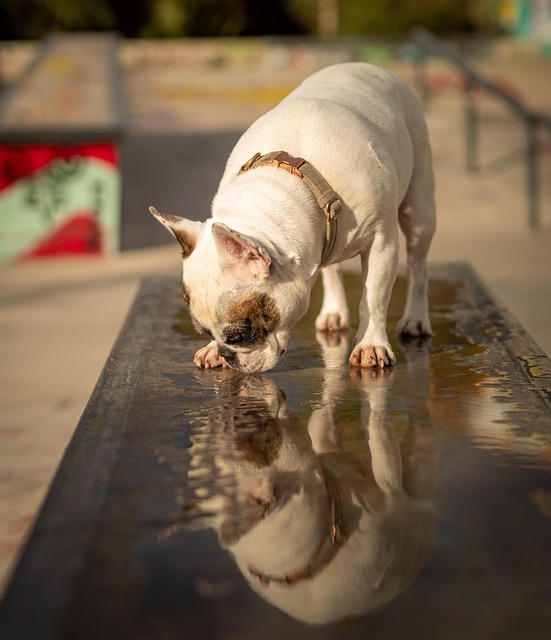
# Does Puppy Potty Training Spray Work for French Bulldogs?
Yes, puppy potty training spray works, but not the way the bottle implies. It does not teach your puppy where to pee. It works as a scent-based attractant that makes a specific spot more appealing to sniff and investigate, which increases the odds your Frenchie will eliminate there. For a breed as stubborn and easily distracted as the French Bulldog, that subtle nudge matters — but the spray is a supporting tool, not a replacement for supervision, scheduling, and cleaning.
What Is Actually in Potty Training Spray?
Most potty training sprays contain a synthetic or natural pheromone blend designed to mimic the scent of a canine urine marking spot. Some brands add ammonia or a generic “grassy” scent. The theory is simple: dogs urinate where they smell urine, so you apply the spray to a pee pad or outdoor patch to trigger that instinct.
Here is the honest breakdown of what you are buying:
| Ingredient Type | What It Does | Realistic Effectiveness |
|---|
————–
| ————————- |
|---|
Mimics dog urine markers
| Works for some dogs, ignored by others |
|---|
Mimics urine smell
| Can work, but risky — ammonia smells like cleaner to dogs, which may confuse them |
|---|
Adds outdoor scent
| Mild attractant at best |
|---|
Breaks down existing urine odors | Useful for cleaning, not for attracting |
The key limitation: French Bulldogs are not scent-driven hunters like Beagles or Bloodhounds. They are companion dogs with a decent but not exceptional nose. Your Frenchie is far more motivated by where you put the pad and how consistent your schedule is than by the spray itself.
Does the Spray Work on Stubborn French Bulldogs?
French Bulldogs have a well-earned reputation for selective hearing. When your Frenchie decides she does not want to pee on the pad, no spray on earth will change her mind. This breed responds to routine and reward, not to subtle scent cues.
That said, the spray does have a specific window of usefulness: the first two to three weeks after you bring your puppy home. During this period, a Frenchie puppy is still learning what “outside” or “pad” even means. The spray can help bridge that gap by making the pad smell like a legitimate bathroom spot. Once your puppy has successfully peed on the pad twice, the spray becomes irrelevant — her own scent is now the strongest attractant.
The real issue is not whether the spray works. It is whether you are using it as a shortcut. If you spray the pad but leave your puppy unsupervised, she will pee on the rug three feet away because that is where she happened to be when the urge hit. The spray does not train. It only attracts.
How to Use Potty Training Spray Correctly (A Frenchie-Specific Routine)
Here is a concrete, time-based plan that actually works with a French Bulldog puppy. This assumes you are using an indoor pad setup, which is common for Frenchie owners in apartments or during cold months — this breed hates rain and cold and will absolutely refuse to go outside in bad weather.
Step 1: Set up a confined zone (Days 1–3)
Keep your Frenchie puppy in a small x-pen or gated area with her bed, water, and one pee pad placed at the far end. Spray the pad once in the morning. Do not spray it again until the pad is changed. Over-spraying creates an overwhelming smell that can actually repel her.
Step 2: Use the “after-everything” rule (Days 1–14)
Take your puppy to the pad immediately after these five moments: waking up, finishing a meal, finishing a play session, coming out of her crate, and every 45 minutes while she is awake. Say nothing. Just walk her to the pad and wait. French Bulldogs are slow to wake up and slow to get moving — give her two full minutes of standing on the pad before you give up.
Step 3: Reward the instant she finishes (Days 1–14)
The moment she pees on the pad, mark it with a “yes!” and give a high-value treat. French Bulldogs are extremely food-motivated, so use something soft and smelly like boiled chicken or string cheese cut into pea-sized pieces. Do not wait until she is done walking away — the reward must happen within two seconds of the pee finishing.
Step 4: Phase out the spray (Day 14 onward)
By week two, your puppy’s own urine scent is on the pad. Stop spraying entirely. If she starts missing the pad, the problem is usually that the pad is too far from her sleeping area or that you are not watching closely enough — not that the spray has worn off.
Step 5: Transition outdoors (Week 8–12)
When you move to outdoor potty training, spray a small patch of grass in your yard with the same product. This helps your Frenchie understand that the grassy area near your door is the bathroom zone. Do not spray the entire yard — just a two-foot circle. Once she goes there twice, stop spraying.
What Potty Training Spray Cannot Fix
There are three common Frenchie-specific problems that no spray will solve:
Separation anxiety accidents. [French Bulldogs bond intensely and often pee from stress when left alone](https://pawsandwhiskerss.online/why-do-french-bulldogs-have-separation-anxiety/). This is not a house-training failure — it is an emotional response. If your puppy only has accidents when you are out of sight, the spray is useless. You need to work on crate training and short, positive departures instead. [LINK: french bulldog separation anxiety training]
Submissive urination. Some Frenchie puppies pee when greeting people or when scolded. This is an involuntary response to excitement or fear. Spraying a pad will not help because the puppy is not choosing where to go. Ignore the behavior, avoid loud corrections, and keep greetings low-key until she outgrows it.
Medical issues. If your Frenchie puppy was doing fine and suddenly starts having accidents, or if she is drinking excessive water and peeing constantly, that is not a training problem. It could be a urinary tract infection or bladder issue. This is a genuine case where you need a vet — do not waste time with spray while an infection worsens.
Are There Better Alternatives to Spray?
For most French Bulldog owners, the spray is a minor convenience. The real tools that matter are:
| Tool | Why It Works for Frenchies |
|---|
—————————|
| Enzyme cleaner | Breaks down the urine smell your Frenchie can still detect — if she smells old pee on the rug, she will keep going there |
|---|
Frenchies are den animals; a cozy crate discourages soiling because they do not want to lie in it |
| High-value treats | Food is the single strongest motivator for this breed |
|---|
Frenchies thrive on predictability; feeding at the same times means pooping at the same times |
If you want to try the spray, buy a small bottle and use it only for the first two weeks. If your puppy ignores it completely after five or six attempts, return it. You are not doing anything wrong — some dogs simply do not respond to synthetic pheromones.
[How Long Does Potty Training Take for a French Bulldog](https://pawsandwhiskerss.online/how-long-does-puppy-potty-training-take/)?
Realistic expectations matter. French Bulldogs are not the fastest house-trainers. Their stubborn streak means they will sometimes hold it just to prove a point, and their small bladders mean they cannot hold it long even when they want to.
Typical timeline:
| Age | What to Expect |
|---|
—————-|
| 8–10 weeks | Accidents daily; needs a potty break every 45–60 minutes |
|---|
Can hold it 2–3 hours; starts actively seeking the pad or door |
| 14–18 weeks | Most accidents gone; occasional regression during teething or growth spurts |
|---|
Reliable indoors, but do not trust her overnight yet |
| 7–12 months | Fully house-trained, assuming consistent training |
If your Frenchie is over six months old and still having daily accidents, [reassess your process](https://pawsandwhiskerss.online/what-to-do-when-puppy-potty-training-isn-t-working/). Are you cleaning accidents with an enzyme cleaner? Are you watching her constantly? Are you giving her too much freedom too fast? The spray is not the answer at this stage — management is.
Common Mistakes Frenchie Owners Make with Potty Spray
Spraying the pad while the puppy watches. This seems logical, but it can backfire. Some puppies get curious and start chewing or pawing at the wet pad. Spray the pad before you bring the puppy into the room.
Using spray on the floor instead of the pad. If you spray the floor directly, you are teaching your puppy that the floor is a bathroom. That is the opposite of what you want. Spray only the pad or the designated outdoor spot.
Expecting the spray to cover up bad cleaning. If you used a regular cleaner with bleach or ammonia on a previous accident spot, your Frenchie can still smell the urine underneath. The spray will not override that. You need an enzyme cleaner to fully break down the old stain. [LINK: best enzyme cleaners for dog urine]
Giving up after one week. French Bulldogs are slow to generalize. Your puppy might nail the pad for three days and then miss it for two. That is normal. Consistency over eight to twelve weeks is what produces a reliably house-trained Frenchie, not a magic spray.
Frequently Asked Questions
Q: Can I use potty training spray outside instead of on pads?
Yes. Spray a small two-foot patch of grass near your door to help your Frenchie identify the bathroom zone. Reapply only until she has successfully gone there twice, then stop — her own scent will take over.
Is potty training spray safe for French Bulldog puppies?
Most commercial sprays are safe when used as directed, but check the label for ammonia. Ammonia-based products can irritate a puppy’s sensitive nose and respiratory tract — a real concern for brachycephalic breeds like Frenchies. Choose a pheromone-based spray instead.
Why is my Frenchie ignoring the potty training spray?
The most common reasons are over-spraying (too strong a smell), using it inconsistently, or simply having a dog that does not respond to synthetic pheromones. If she ignores it after five or six attempts, stop using it and focus purely on schedule and rewards.
Does potty training spray help with male French Bulldog marking?
No. Marking is a territorial or hormonal behavior, not a house-training issue. Spray will not stop a male Frenchie from lifting his leg on furniture. Neutering, belly bands, and management are the effective tools for marking.
Related: Stop Dog Barking Separation Anxiety: Frenchie Guide
Related: How Long Does Puppy Potty Training Take? Frenchie Guide
Leave a Reply