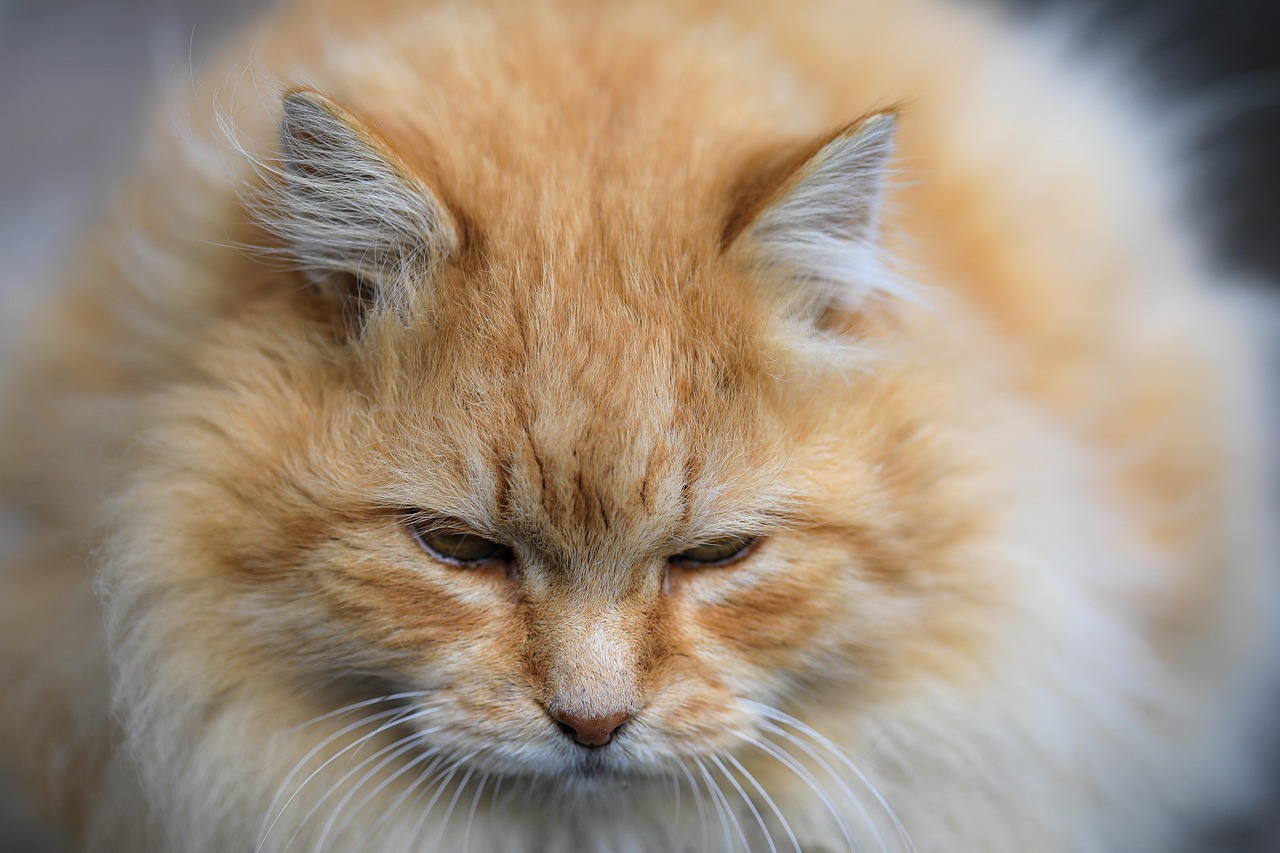
No cat is truly hypoallergenic, but Siberian cats are widely considered one of the better options for allergy sufferers. Many Siberians produce lower levels of Fel d 1, the protein responsible for most cat allergies — though levels vary enormously between individual cats, and some Siberians trigger reactions just as badly as any other breed.
That last sentence is the part most people skip, and it’s the part that matters most if you’re about to bring one home. Let’s get into what’s actually going on.
What actually causes cat allergies?
Cat allergies are not caused by fur. They’re caused by proteins — primarily Fel d 1, which is produced in cats’ saliva, sebaceous glands, and anal glands. When a cat grooms, it spreads saliva across its coat, and that saliva dries into airborne particles that carry the protein.
There are other allergens too: Fel d 4 (found in saliva), Fel d 7, and albumin in cat urine and blood. But Fel d 1 accounts for the majority of reactions in allergic people, which is why it gets all the attention.
A few things worth knowing about Fel d 1:
- It’s tiny and sticky. Particles are small enough to stay airborne for long periods and adhere to walls, fabric, and clothing. It’s been found in homes without cats and even in schools where no cat lives.
- It’s not about hair length. Longhaired cats aren’t inherently worse than shorthairs. A hairless Sphynx still produces Fel d 1 — and because they groom constantly and deposit oils directly on skin, many allergy sufferers react more to them.
- Intact males produce more than neutered males. Hormones influence production. Neutering reduces Fel d 1 output significantly.
- Kittens produce less than adults. A kitten that doesn’t bother you may become a problem at maturity.
So when someone says a breed is “hypoallergenic,” what they usually mean is that individual cats of that breed tend to produce less Fel d 1. It’s a tendency, not a guarantee.
Are Siberian cats actually hypoallergenic?
Siberians are often marketed as hypoallergenic because many produce measurably lower Fel d 1 than other breeds. But “lower” is not “none,” and the range within the breed is huge — some Siberians produce levels comparable to a typical domestic shorthair.
The claim traces back to the breed’s origins in Russia, where Siberian cats lived outdoors in cold climates and developed a dense triple coat. Breeders and allergy sufferers noticed that some people with severe cat allergies could live with Siberians without symptoms. That observation spread, and the breed became the go-to recommendation for allergic households.
What the marketing often leaves out:
- Fel d 1 levels are individual, not breed-wide. A study of Siberian cats found a wide spread of Fel d 1 in saliva and fur, with some cats producing very little and others producing a lot. You cannot assume a Siberian will be low-producing just because it’s a Siberian.
- There’s no reliable test at the kitten stage. Fel d 1 production changes with age and hormones. A low reading at 12 weeks doesn’t guarantee a low reading at 2 years.
- Some breeders claim to breed “low-allergen” lines. Some do test and select for low Fel d 1, and that’s genuinely useful — but the testing is not standardized across the industry, and you should ask for actual numbers, not just a verbal assurance.
If you have a serious cat allergy, the honest answer is: a Siberian might work for you. It’s a coin flip, not a solution.
Why do some people with cat allergies tolerate Siberians?
The most plausible explanation is simply lower Fel d 1 output in some individuals. If a cat produces less of the protein you’re allergic to, you’re exposed to less of it, and your immune system may not cross the threshold that triggers symptoms.
There’s also a theory about the ratio of Fel d 1 to other proteins, and some anecdotal reports that Siberians produce a slightly different form of the protein. Neither has been convincingly proven. Treat “they produce a different protein” as folklore until someone shows you the data.
What we do know:
- Allergy is dose-dependent. Most allergic people have a threshold. Below it, no symptoms. Above it, symptoms. A lower-producing cat keeps you below your threshold — until it doesn’t.
- Sensitization can change over time. Some people tolerate a cat for months and then start reacting. Others react immediately and improve. Your immune system isn’t static.
- Environmental load matters as much as the cat. One low-Fel d 1 cat in a small carpeted apartment is a very different exposure than the same cat in a large house with hard floors and good ventilation.
How can you test whether a Siberian will work for you?
Do not adopt a Siberian based on the breed’s reputation alone. Test with the actual cat, in person, more than once, before you commit.
Here’s a practical protocol:
If you react during the visit, that’s your answer. Don’t talk yourself into it because the cat is beautiful and the breeder is persuasive.
What if you already have a Siberian and react to it?
This happens more than people admit. You brought home a kitten, no reaction for weeks, and now you’re sneezing every morning. Here’s what actually helps, in rough order of effectiveness:
| Strategy | What it does | Realistic impact |
|---|
—
| — |
|---|
Reduces hormone-driven Fel d 1 production
| Moderate — often noticeable within weeks |
|---|
Removes airborne allergen particles
| Moderate to high, especially in small spaces |
|---|
Cuts 8 hours of nightly exposure
| High — often the single biggest change |
|---|
Removes settled allergen
| Moderate |
|---|
Removes allergen reservoir
| High but expensive |
|---|
Removes saliva on the coat
| Moderate, requires consistency |
|---|
Binds Fel d 1 in saliva via an egg antibody
| Moderate — reduces salivary allergen at the source |
|---|
Removes allergen from surfaces
| Moderate — must be HEPA or it just redistributes |
|---|
Manages your immune response | Variable — immunotherapy takes months to years |
A few caveats that matter:
- Bathing the cat helps but is stressful for most cats. Cats are fastidious self-groomers, and a stressed cat may over-groom or hide, which creates other problems. If you bathe, do it gently and not more than every few weeks.
- Allergen-reducing foods are not a cure. They reduce Fel d 1 in saliva, but they don’t eliminate it. Think of them as one layer, not the answer.
- Immunotherapy is the only approach that can change your underlying allergy. It’s a multi-year commitment with a real time cost. Talk to an allergist, not a breeder.
Do Siberians have other traits allergy sufferers should know about?
Yes — and some of them affect the allergy equation indirectly.
They’re big, active, and need real enrichment. Siberians are large, muscular cats with a dog-like temperament. They climb, they play hard, and they need vertical space — cat trees, shelves, window perches — plus daily interactive play that mimics hunting. A bored Siberian is a destructive Siberian.
They’re social and often dislike being alone. This is a breed that bonds hard. If you’re out 12 hours a day, a Siberian may not be the right fit, and a stressed cat is a cat that over-grooms and sheds more.
They have a dense triple coat. That means more fur on your furniture, more grooming, and more saliva distributed across the coat when they groom. The coat itself isn’t the allergen, but it’s a bigger surface area for allergen to sit on.
They’re generally healthy but not immune to the usual cat problems. Siberians can still develop chronic kidney disease, hyperthyroidism, dental disease, hypertrophic cardiomyopathy, and FLUTD. Because cats hide illness, you need to watch the litter box closely — changes in urination, defecation, or litter box avoidance are often the first sign something is wrong. [LINK: why is my cat peeing outside the litter box]
They’re obligate carnivores. If you’re choosing a food — including an allergen-reducing one — it needs to be meat-based and appropriately portioned. Cats have different protein requirements than dogs, and “just feed less” is not a weight management plan for a cat. [LINK: how much should I feed my cat]
What should you ask a Siberian breeder before buying?
If you’re going the breeder route, ask these questions directly. A good breeder will have answers. A bad one will get defensive.
- Do you test your breeding cats for Fel d 1? Which lab, and can I see the numbers?
- What’s the Fel d 1 level of the specific kitten’s parents?
- Can I visit and spend time in your cattery before committing?
- Do you offer a trial period or foster-to-adopt arrangement?
- What health testing do you do — HCM echo, PKD, FeLV/FIV?
- How are the kittens raised — indoors, socialized, litter-trained?
- What’s your policy if the cat triggers allergies in my household?
If a breeder guarantees a cat is hypoallergenic, walk away. No ethical breeder can make that promise.
The bottom line
Siberians are a reasonable choice for some allergy sufferers, but they are not hypoallergenic in any medical sense. If you have a cat allergy and want a Siberian, the only way to know is to spend real time with the specific cat — ideally more than once, ideally before you commit. Manage your expectations, layer your mitigation strategies, and be honest with yourself about whether you can live with the outcome.
Frequently Asked Questions
Are Siberian cats 100% hypoallergenic?
No. No cat breed is truly hypoallergenic. Siberians often produce lower levels of the Fel d 1 protein that causes most cat allergies, but production varies widely between individual cats, and some Siberians trigger reactions as strongly as any other breed.
Can I test if I’m allergic to a Siberian before adopting?
Yes, and you should. Visit the breeder or foster home in person for at least 30–60 minutes, ideally on two separate days, and spend time in the room where the cats live. Ask about trial or foster-to-adopt arrangements so you can assess reactions over weeks, not minutes.
Do Siberian cats produce less Fel d 1 than other breeds?
Many do, on average, but the range within the breed is large. Some Siberians produce very low Fel d 1; others produce levels similar to a typical domestic shorthair. Ask breeders for actual lab numbers on the specific cat’s parents, not verbal claims.
What can I do if I already have a Siberian and I’m reacting to it?
Keep the cat out of your bedroom, run HEPA air purifiers, wash bedding weekly, wipe the cat down daily, and consider an allergen-reducing cat food. Neuter or spay the cat if not already done. If symptoms persist, see an allergist — immunotherapy is the only approach that can change the underlying allergy.
Related: Fluffy French Bulldog Price by Color and Pattern (2025 Guide)
Related: Do Siberian Cats Cause Allergies? What Owners Need to Know
More Siberian cat answers on this topic
So Do Siberian Cats Actually Produce Less Fel d 1?
Yes — Siberians as a breed tend to produce lower levels of Fel d 1 than most other breeds, and this is the basis for their reputation as an “allergy-friendly” cat. But the reduction is variable, not guaranteed, and it’s not zero.
The research here is thinner than the marketing suggests. Some studies have found that Siberian saliva contains measurably less Fel d 1 than, say, a Siamese or a Domestic Shorthair. Other work has found that the range within the breed overlaps heavily with other breeds — meaning some Siberians are just as allergenic as any other cat.
What this means practically:
| What you’ll hear | What’s actually true |
|---|
—|
| “Siberians are hypoallergenic” | No cat is hypoallergenic. Siberians produce less Fel d 1 on average. |
|---|
Many people react less. Some react the same. A minority react just as badly. |
| “All Siberians are low-allergen” | Individual variation is huge. Two Siberians can differ significantly. |
|---|
Kittens often produce less Fel d 1, but levels rise as they mature. |
If you’re seriously considering a Siberian for allergy reasons, the only reliable test is exposure. Spend 30–60 minutes in a home with adult Siberians, ideally multiple cats, and see what happens. A single brief visit to a breeder’s cattery isn’t enough — reactions can be delayed, and a cattery full of cats is a different exposure than one cat in your living room.
Why Do Some People React to One Siberian and Not Another?
Because Fel d 1 production is individual, not breed-wide. A Siberian that happens to be a low producer may be tolerable to you; its littermate may not be.
Factors that influence how much allergen a specific cat puts into your home:
- Sex and neuter status. Intact males produce the most Fel d 1. Neutered females typically produce the least. If you’re choosing a Siberian for allergy reasons, a neutered female is the safer bet.
- Grooming frequency. Cats that groom heavily spread more allergen across their coat. You can’t stop a cat grooming, but regular brushing (by a non-allergic household member, outdoors if possible) removes loose hair and some of the protein load.
- Your specific sensitivity. If you’re allergic to Fel d 4 or albumin rather than Fel d 1, a low-Fel d 1 cat won’t help. Allergy testing can tell you which protein you react to.
- Your environment. A Siberian in a carpeted home with fabric sofas and no air filtration will produce a very different allergen load than the same cat in a home with hard floors and HEPA filtration.
Can You Reduce Allergens From a Siberian Cat?
Yes — you can meaningfully lower the allergen load in your home even with a cat that produces normal amounts of Fel d 1. None of these methods eliminates the allergen, but combined they can make the difference between “miserable” and “manageable” for a mildly allergic person.
Practical steps, in order of impact
What doesn’t work
- “Hypoallergenic” cat food. No commercially available cat food has been shown to reliably reduce Fel d 1 production. There is one specialised diet (Purina Pro Plan LiveClear) that uses an egg protein antibody to neutralise Fel d 1 in the cat’s saliva. It has some evidence behind it, but it’s not a cure, and it takes weeks to show effect.
- Bathing the cat frequently. Cats are not dogs. Frequent bathing strips the coat, stresses the cat, and can cause skin problems. A bath every few weeks at most, if the cat tolerates it.
- Air purifiers without HEPA. Ionisers and “air fresheners” don’t remove Fel d 1 and some produce ozone, which is a respiratory irritant in its own right.
What Should You Do Before Bringing a Siberian Home?
Plan for a trial, not a purchase. A Siberian is a 15-year commitment, and if you’re allergic, you need to know before the cat is bonded to you.
A realistic process:
Are There Other Breeds People Consider for Allergies?
Siberians get the most attention, but they’re not the only breed marketed as allergy-friendly. The others are mostly variations on the same theme: lower Fel d 1, or a coat that spreads less of it.
| Breed | Why people consider it | Reality check |
|---|
—
| — |
|---|
Lower Fel d 1 on average
| Individual variation is large |
|---|
Less Fel d 1 in saliva than some breeds
| Still a cat; still produces allergen |
|---|
Lower Fel d 1 reported
| Very active, very vocal; not for everyone |
|---|
Sometimes cited as lower-allergen
| Evidence is weak; individual variation dominates |
|---|
No coat to trap allergen
| Often worse for allergy sufferers — protein on skin |
|---|
Some claim lower Fel d 1 | No reliable evidence; high-energy breed |
The pattern is consistent: no breed is reliably hypoallergenic, and individual cats vary more than breeds do. If you’re set on a cat and you’re allergic, your best odds are a neutered female of a breed with lower average Fel d 1, in a home set up to minimise allergen, with a doctor-managed treatment plan.
A Note on Cat-Specific Reality
Two things worth saying plainly, because they come up constantly in allergy conversations.
First, cats hide illness. If you bring a Siberian home and the cat starts sneezing, hiding, or avoiding the litter box, that’s not “just allergies” — cats don’t get human allergies, and a cat showing those signs needs a vet. Subtle changes in appetite, litter box habits, grooming, or hiding are the real signals of feline illness, and they’re easy to miss in a new cat you’re already watching for your own symptoms.
Second, cats are obligate carnivores. Whatever you feed a Siberian — allergy-friendly or not — it needs to be meat-based and portioned for a cat, not a dog. Obesity is a major health problem in indoor cats and it worsens everything from arthritis to diabetes. If you’re managing your own allergies and the cat’s health at the same time, don’t let the cat’s nutrition slide.
And one safety point that has nothing to do with allergies but everything to do with cat ownership: never give a cat human medication. Paracetamol (acetaminophen) and ibuprofen are rapidly fatal to cats. If your cat seems unwell, that’s a vet call, not a home remedy.
Leave a Reply