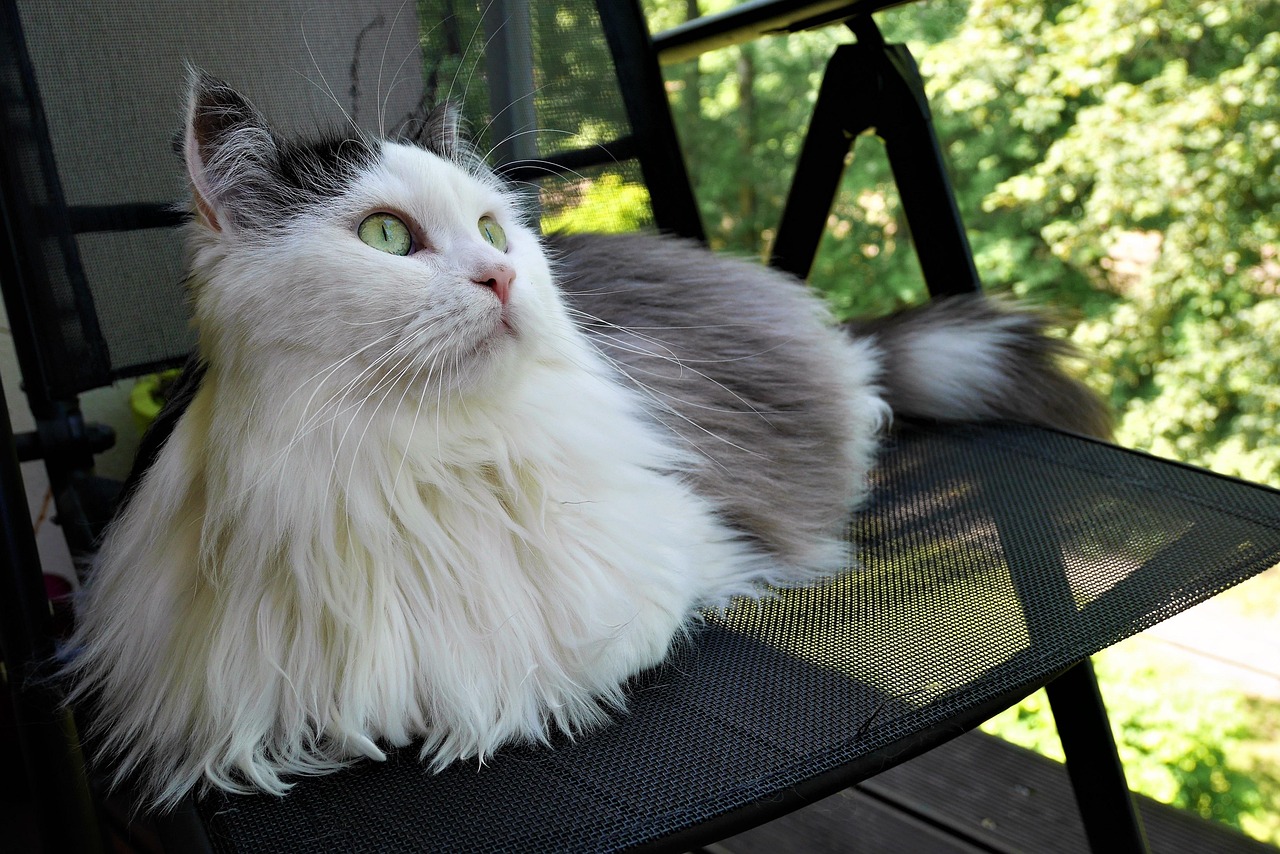
Grooming a Siberian cat means brushing two to three times a week most of the year, then daily during the two heavy shedding periods in spring and autumn. Their semi-longhaired triple coat — a dense insulating undercoat plus a weather-resistant topcoat — mats fast if you skip sessions, especially behind the front legs, under the belly, and around the ruff. The good news: Siberians are generally cooperative, low-oil cats whose coats respond well to routine rather than heroics.
If you’ve just brought one home, or you’re staring at a cat who suddenly looks twice her normal size because the undercoat is letting go, this guide covers what to do, what to buy, and when to stop and get help.
How Often Should You Brush a Siberian Cat?
Brush a Siberian two to three times weekly for maintenance, and daily during the spring and autumn coat blows, which each last roughly two to three weeks. A single weekly session is not enough for this breed — the undercoat tangles against the skin before you ever see a problem on the surface.
Why the schedule changes with the seasons
Siberians are built for a Russian winter. That means a genuinely thick undercoat that sheds in response to daylight changes, not temperature. Indoor cats under artificial light often shed less predictably than outdoor cats, which is why some owners report near-constant light shedding instead of two clean seasonal blows. Either pattern is normal.
The trap is brushing only the topcoat. Running a brush over the back feels productive and accomplishes almost nothing. The undercoat is where mats start, and it sits close to the skin, particularly on the belly, armpits, and the “trousers” on the back legs.
A realistic weekly routine
| Day | Task | Time |
|---|
—
| — |
|---|
Full brush-out: slicker, then metal comb to the skin
| 10–15 min |
|---|
Comb only — check armpits, belly, britches
| 5–8 min |
|---|
Full brush-out plus ruff and tail
| 10–15 min |
|---|
Quick comb pass, all zones | 5 min |
If you can only manage one thing, make it the metal comb. A comb with teeth long enough to reach the skin tells you the truth about whether you’ve actually removed loose undercoat or just polished the surface.
What Tools Do You Actually Need?
You need four things: a slicker brush, a metal greyhound-style comb, blunt-tipped grooming scissors, and nail clippers. Everything else — de-shedding rakes, dematting tools, fancy gloves — is optional and, in the wrong hands, actively harmful to a Siberian’s coat.
The core kit
- Slicker brush with fine, bent wires: removes surface loose hair and lifts the coat so you can see what’s underneath. Don’t press hard; slickers can scratch skin.
- Metal comb with rotating teeth, teeth roughly 2.5–3 cm long: the diagnostic tool. If it glides through, you’re done. If it snags, there’s a mat or packed undercoat.
- Blunt-tipped scissors: for cutting out a single solid mat when nothing else works. Never use pointed scissors near skin.
- Nail clippers (scissor-style or guillotine): cats need nail trims every two to three weeks.
What to skip
Furminator-style de-shedding rakes cut the coat rather than removing dead hair. Used aggressively on a Siberian, they can leave bald patches and damage the topcoat’s texture. If you use one at all, use it lightly during shedding season only, and never on the tail or ruff.
Dematting tools are for professionals. On a cat with thin, easily torn skin, a dematting blade in untrained hands causes wounds. If a mat is tight against the skin, that’s a vet or groomer job.
How Do You Handle Mats Without Hurting Your Cat?
Small, loose mats can be worked out with your fingers and a comb over several sessions. Mats that are tight against the skin, or that cover a large area, should be removed by a groomer or vet — pulling at them yourself risks tearing skin, and cat skin tears easily.
Step-by-step for a small mat
When to hand it over
Book a professional if:
- The mat is on the belly, armpit, or inner thigh
- Skin is visible through or around the mat, or looks red and irritated
- Your cat is older, arthritic, or has lost weight — she may not tolerate the positioning, and mats in senior cats often signal that self-grooming has dropped off
- Your cat becomes defensive or aggressive when you touch the area
That last point matters more than it sounds. A cat who suddenly hates being brushed on one specific spot may be telling you that spot hurts. Cats hide pain well, and grooming intolerance is one of the few visible signals. If your cat has stopped grooming altogether or is over-grooming one area, that’s worth a vet visit rather than a grooming problem — see [LINK: why is my cat over-grooming].
Do Siberian Cats Need Baths?
Most Siberians don’t need routine baths. Their coat is naturally low-oil and largely self-cleaning, and frequent bathing strips the natural oils that keep the topcoat weather-resistant. Bathe only when there’s a real reason: a skin condition your vet is treating, a contaminant on the coat, or a cat who’s lost mobility and can’t manage her own hygiene.
When a bath is genuinely warranted
- Something toxic or sticky on the coat that the cat will ingest while grooming. Cats are fastidious, and anything on the fur goes into the mouth.
- A prescribed medicated shampoo for a diagnosed skin issue.
- A senior cat who can’t reach her rear end, where debris accumulates.
- Show prep, if you’re showing.
How to bathe a Siberian without a disaster
Never use a human hairdryer on a hot setting. Cat skin burns at temperatures that feel mild to your hand, and the noise alone can set back your grooming relationship for weeks.
How Do You Trim a Siberian’s Nails and Handle the Rest?
Trim nails every two to three weeks, check ears monthly, and brush teeth ideally daily — Siberians are no more prone to dental disease than other cats, but no cat cleans its own teeth. Grooming is more than coat care, and the non-coat jobs are the ones owners skip.
Nails
Siberians have thick, strong claws, and indoor cats don’t wear them down. Trim just the clear hooked tip, staying well clear of the pink quick. On dark nails, take tiny slivers and check the cut end — a greyish dot means you’re close, a pink dot means stop.
If your cat only tolerates one nail per session, do one nail per session. That’s fine. Progress beats perfection, and a cat who associates the clippers with a treat and a release will eventually sit through all four paws.
Ears
Check monthly. A healthy cat ear is pale pink, dry, and nearly odourless. Dark waxy debris, redness, or a yeasty smell means a vet visit — don’t self-treat with ear cleaners if you see those signs, because a ruptured eardrum turns a routine cleaning into a serious problem.
Teeth
Daily brushing with a cat-specific enzymatic toothpaste and a small finger brush is the gold standard. If daily is unrealistic, aim for several times a week. Siberians are a long-lived breed, and dental disease is one of the most common things vets find in middle-aged and older cats. Dental pain also shows up as dropped food, one-sided chewing, or a cat who suddenly prefers soft food — subtle signs that owners miss for months.
What Is the Siberian Coat Blow and How Do You Survive It?
The coat blow is the two-to-three-week period when a Siberian dumps her undercoat, usually in spring and autumn. During this window, you’ll pull out handfuls of fur daily, and the house will look like a snow globe. Daily combing is the only thing that keeps it manageable.
What actually helps
- Comb before brushing. The comb gets the undercoat; the slicker tidies the surface. Reverse the order and you’ll just push loose hair deeper.
- Work in sections — one side, then the other, then belly, then britches, then tail. Finish each section before moving on.
- Have a waste bin next to you. Loose undercoat drifts. Every tuft you don’t contain ends up on the sofa or, worse, in a hairball.
- Increase play and water access. Cats swallow a lot of fur while grooming, and hairballs are a mechanical problem, not a dietary one. More water and more fibre help move things through. Frequent hairballs, vomiting, or a cat who stops eating during shedding season needs a vet, not a hairball remedy — see [LINK: why is my cat vomiting].
- Consider a professional de-shed at the start of the blow if your cat won’t tolerate long sessions. A groomer can do in one appointment what would take you a week of short ones.
A note on hairballs
Occasional hairballs are normal for a longhaired cat. Weekly hairballs are not. If your Siberian is bringing up hairballs more than about once a month, or is retching without producing anything, that’s a vet conversation. Retching without a hairball can look identical to a cat trying to vomit around a foreign body or an obstruction.
Grooming as a Health Check
Every brushing session is a free physical exam. You’re running your hands over the whole cat, and that’s how you catch the things cats hide.
Things to notice while you groom:
| What you find | What it can mean |
|---|
—|
| Sudden matting in a cat who was fine last month | Reduced self-grooming — often pain, arthritis, or illness |
|---|
Stress, allergies, or skin parasites |
| Lumps, scabs, or tender spots | Worth a vet check, especially in older cats |
|---|
Common in hyperthyroidism and chronic kidney disease |
| Dandruff or a dull, greasy coat | Skin issue, diet issue, or underlying illness |
|---|
Dental disease — extremely common and under-treated |
Siberians are a generally healthy, long-lived breed, but “generally healthy” isn’t “immune.” Chronic kidney disease and hyperthyroidism are common in older cats of any breed, and both are far easier to manage when caught early. Because cats mask illness so well, the changes you notice during grooming are often the first clue anything is wrong.
One more thing worth knowing: if your cat is off her food, hiding more, or using the litter box differently — going more often, straining, or avoiding it — those are the signals that matter most. Litter box behaviour is the single best window into a cat’s health and stress level. A cat who suddenly stops using the box or starts crying in it may have a urinary blockage, which is a life-threatening emergency in male cats. Don’t wait on that one. See [LINK: cat straining to urinate].
A Word on Products and Safety
Never use human medications on a cat. Paracetamol (acetaminophen) and ibuprofen are rapidly fatal to cats — a single tablet can kill. This applies to anything you might be tempted to reach for after a grooming accident, including topical creams and ointments. If your cat has a cut, a burn, or has ingested something, call your vet or a pet poison hotline immediately.
Similarly, avoid human shampoos, essential oils, and anything containing permethrin (found in some dog flea products) — all are toxic to cats. Cat-specific products only.
This article is general guidance, not veterinary advice. Anything involving a wound, a suspected ingestion, a cat who’s stopped eating, or a change in litter box habits needs a vet, not a grooming fix.
Frequently Asked Questions
Do Siberian cats shed a lot?
Yes. Siberians have a triple coat with a dense undercoat, and they shed heavily twice a year in spring and autumn, with lighter shedding year-round. Daily combing during the coat blow keeps it manageable. They shed more than a short-haired cat but less than many people expect from a longhair.
Can I shave my Siberian cat in summer?
No. Shaving removes the coat’s insulating and UV-protective layers and can permanently damage the topcoat texture, which may grow back patchy or coarse. Siberians regulate heat through their coat. If you’re worried about summer comfort, provide shade, cool surfaces, and water instead.
How do I stop my Siberian getting mats?
Comb to the skin two to three times weekly with a metal comb, not just a slicker brush. Pay attention to armpits, belly, and back legs. Daily combing during shedding season prevents most mats. If mats keep forming in the same spot, have a vet check that area for pain or skin issues.
My Siberian hates being brushed. What do I do?
Shorten sessions to two or three minutes, use a soft slicker, and pair every session with a high-value treat. Start with areas she tolerates — usually the back and shoulders — and build up. Never restrain or chase her. If she suddenly hates being touched in one spot, that’s a vet question, not a training one.
Related: Fluffy Frenchie Health Problems: What Owners Need to Know
Leave a Reply