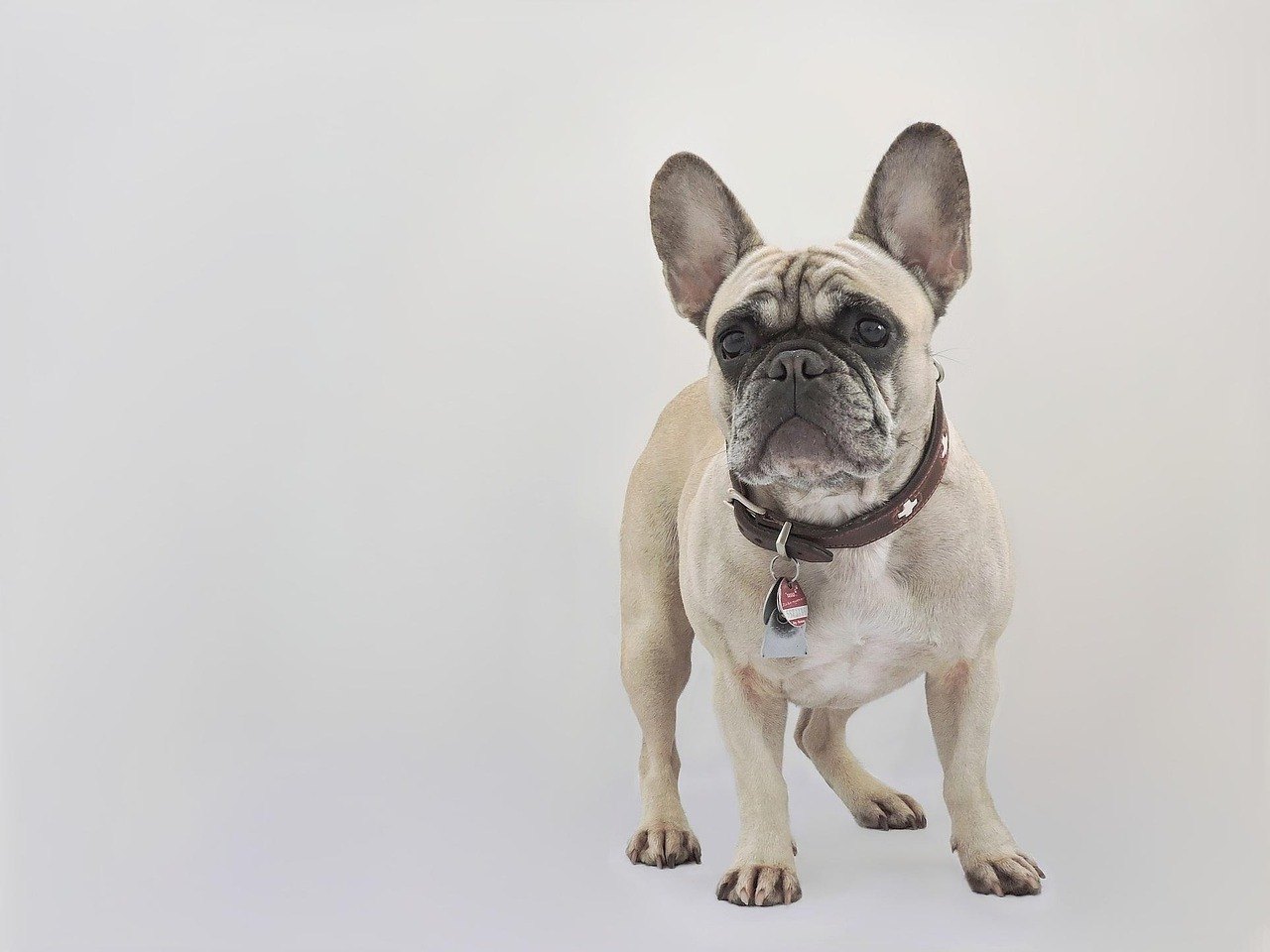
Feeding a French Bulldog is not the same as feeding other dogs. Frenchies are small-boned, prone to weight gain, and famously prone to eating too fast — which for a flat-faced breed means swallowed air, wind, and sometimes worse. Getting the portion right matters more than the brand on the bag.
This calculator works out how many calories your French Bulldog needs per day, converts that into grams or cups of the food you actually feed, and tells you the goal weight to aim for if your dog is carrying extra pounds. It takes about fifteen seconds.
Work out exactly how much to feed your Frenchie
Enter five things and get daily calories, grams, and a goal weight if your dog needs to lose or gain.
How this calculator works out your Frenchie’s portion
Two numbers drive everything: resting energy requirement (RER) and a life-stage multiplier.
RER is the energy your dog would burn at complete rest, and it scales with bodyweight raised to the power of 0.75 — so a heavier dog needs disproportionately more energy:
RER (kcal/day) = 70 × bodyweight in kg0.75
That RER is then multiplied by a factor reflecting the dog’s age, whether they are neutered, and how active they are. The multiplier is where most feeding mistakes happen — a neutered adult Frenchie needs roughly 10–20% less than an intact one, and it is very easy to keep feeding the old amount after the operation.
| Life stage / status | Multiplier | Example: 12 kg Frenchie |
|---|---|---|
| Puppy, under 4 months | 3.0 × RER | 417 kcal/day |
| Puppy, 4–12 months | 2.0 × RER | 903 kcal/day |
| Adult, intact | 1.8 × RER | 812 kcal/day |
| Adult, neutered or spayed | 1.6 × RER | 722 kcal/day |
| Senior, 8+ years | 1.4 × RER | 632 kcal/day |
| Overweight, feeding for goal weight | 1.0 × RER | 400 kcal/day at a 10.2 kg goal |
Activity then nudges the figure by about 10–15% in either direction. That is deliberate: activity matters, but not nearly as much as people assume. A Frenchie that goes from two short walks to three does not suddenly need a third more food, and over-feeding by a few hundred calories a day adds up to real weight within a couple of months.
Typical French Bulldog weight by age
Most adult French Bulldogs end up somewhere between 8 and 13 kg (18–28 lb), with males usually sitting higher in that range. The curve matters more than any single number, so weigh your dog every two weeks and watch the direction of travel.
| Age | Typical weight range | What’s happening |
|---|---|---|
| 8 weeks | 2–3.5 kg (4.5–7.5 lb) | Leaving the litter; four meals a day |
| 3 months | 4–6 kg (9–13 lb) | Fastest growth phase |
| 6 months | 6.5–9.5 kg (14–21 lb) | Growth slowing; frame filling out |
| 9 months | 8–11.5 kg (18–25 lb) | Close to adult size |
| 12 months+ | 8–13 kg (18–28 lb) | Adult; switch to adult portions |
These are typical ranges, not targets. French Bulldogs vary in frame a lot, and a Frenchie that is comfortably lean at 9 kg is healthier than one carrying 11 kg it does not need. If your dog is well outside the range at a given age, that is a conversation for your vet rather than a bigger bowl.
Feeding a flat-faced dog safely
Brachycephalic breeds eat differently, and a few small changes reduce the risk of trouble:
- Raise the bowl. An angled or elevated bowl lets your Frenchie swallow with the neck straighter, which reduces air intake.
- Use a slow feeder. Frenchie eating speed is genuinely a problem — a maze bowl turns a thirty-second meal into a few minutes and cuts the amount of air swallowed.
- Two or three smaller meals beat one large one. Puppies under four months should be on three or four.
- No hard play or walks for 30–60 minutes after eating, especially in warm weather.
- Feed in the cool part of the day. French Bulldogs overheat easily, and a big meal in the heat of the afternoon adds to that load.
- Learn the bloat signs. Repeated unproductive retching, a tight or swollen belly, restlessness or drooling are emergencies in any deep-chested or flat-faced dog. Call your vet immediately.
Should I feed my Frenchie once or twice a day?
Twice a day for adults. French Bulldogs commonly have sensitive stomachs and a tendency to gulp, so splitting the daily portion into two meals keeps hunger manageable and reduces the size of any single meal. Puppies need more frequent, smaller meals — three to four per day until about four months, then three, then two as they approach adulthood.
If your Frenchie is overweight, do not simply halve the bowl and hope. Use the calculator to feed for the goal weight, then reweigh every fortnight. Weight that comes off slowly is weight that tends to stay off.
Frequently asked questions
How much should I feed my French Bulldog per day?
Start with the calculator above: enter your dog’s weight, age, neuter status and body condition, then enter the calories from your own food label. As a rough guide, a lean 12 kg neutered adult French Bulldog needs around 720 kcal a day, which is roughly 200 g of a typical 360 kcal per 100 g dry food. Always confirm against the label on your own bag, because calorie density varies a lot between foods.
How many calories does a French Bulldog need per day?
It depends on weight and life stage, not breed alone. A 10 kg neutered adult needs about 630 kcal a day; the same dog intact would need around 710 kcal; a 2.5 kg puppy under four months needs around 418 kcal. The formula behind the calculator is RER = 70 × bodyweight in kg0.75, multiplied by a life-stage factor.
How much should a French Bulldog weigh?
Most adult French Bulldogs weigh between 8 and 13 kg (18–28 lb). But the scale alone is a poor guide — Frenchies vary in frame, and body condition matters more. Stand over your dog: you should see a waist behind the ribs when viewed from above, and you should be able to feel the ribs under a thin layer of padding with light pressure. If you have to press to find the ribs, your dog is carrying extra weight.
Do French Bulldogs need a slow feeder?
Many do. Flat-faced dogs take in more air while eating, and Frenchies in particular tend to bolt their food. A slow feeder or a scatter feed slows the meal down, which reduces swallowed air and the wind, gurgling and discomfort that follows. If your Frenchie finishes a bowl in under a minute, a slow feeder is worth trying.
Why is my Frenchie always hungry?
Usually one of three things. First, the food may not be measuring out to what you think — a level, weighed portion is often smaller than a scooped one. Second, the portion may be genuinely too small for the activity level. Third, Frenchies are enthusiastic about food by nature and will ask regardless. Weigh the portion for a week and keep a note; if the weight is stable and the body condition is ideal, your dog is being fed correctly and is simply an opportunist.
What is the best food for a French Bulldog?
One that meets a recognised nutritional standard, suits your dog’s digestion, and that you can measure accurately — not a specific brand. French Bulldogs often do well on a consistent diet with a named protein source, because frequent switching tends to unsettle sensitive stomachs. If you are considering raw feeding, read our guide to raw diets for French Bulldogs, and talk to your vet before making the switch.
How do I know if my French Bulldog is overweight?
Use your hands, not just the scale. An overweight Frenchie has no visible waist, ribs you cannot easily feel, and often a rounded belly rather than a tuck. French Bulldogs carry extra weight badly because their frame and airway already limit exercise, so the weight tends to stay on. The calculator’s weight-loss plan feeds for a goal weight that is 7–15% below current weight, which is the gradual range vets generally recommend.
This is general information, not veterinary advice. Portions here are calculated from standard resting-energy formulas and typical food calorie densities. Your dog’s needs can differ because of illness, medication, pregnancy, or a condition such as a heart or thyroid problem. For puppies, seniors, and any dog under veterinary care, confirm the plan with your vet. Please read our full disclaimer.