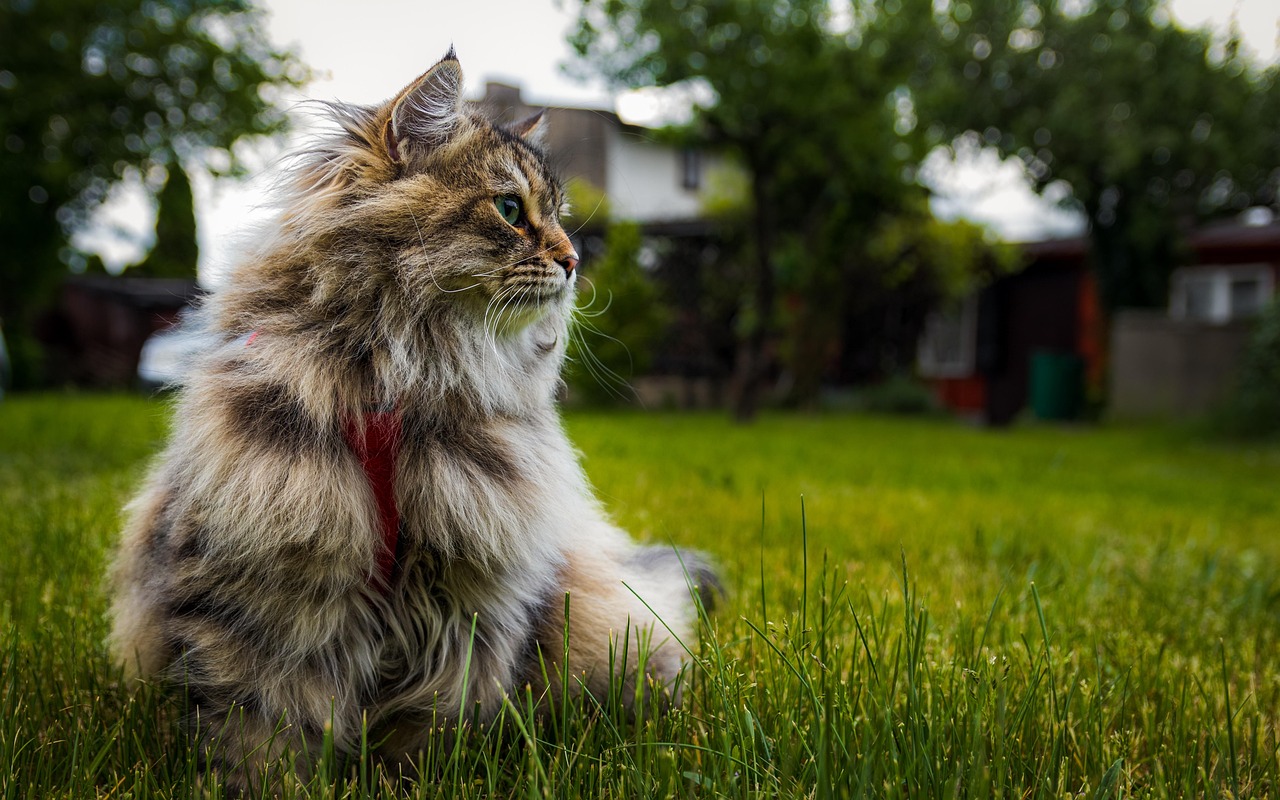
The most common early symptoms of heart disease in a Siberian cat are subtle: a cat that sleeps more, plays less, breathes a little faster at rest, or quietly stops jumping to its favourite high shelf. Many cats show no audible murmur and no obvious signs at all until the disease is advanced, which is exactly why breed-specific screening matters more than waiting for symptoms.
Why does heart disease matter so much in Siberian cats?
Hypertrophic cardiomyopathy (HCM) is the breed’s primary health concern, and it is the most common heart disease in cats generally. In HCM, the muscular wall of the heart — usually the left ventricle — thickens abnormally. The thickened muscle makes the chamber stiffer and less able to relax and fill properly between beats.
Siberians have a known HCM-associated variant in the MYBPC3 gene, which is why responsible breeders screen breeding cats and why owners are encouraged to screen their cats too. Having the gene variant raises risk; it does not guarantee disease, and cats without it can still develop HCM. That distinction matters, because it means a clear DNA test is not a substitute for imaging.
The practical consequence for you as an owner: this is a condition that can be present for years before it announces itself. Siberian cats are also a large, slow-maturing breed — males often reach 5–9 kg and can take three to five years to finish growing. A heart that is quietly remodelling during those growth years may not produce anything you would notice at home.
What are the early symptoms of heart disease in a Siberian cat?
Early symptoms are usually behavioural and easy to miss in a breed that is already calm and laid-back. Watch for a cat that becomes less interested in interactive play, spends more time resting, or gradually stops using the highest perches it once claimed.
Specific things to track:
- Reduced activity — your Siberian no longer initiates fetch sessions, stops following you from room to room, or quits mid-play.
- Increased resting respiratory rate — count breaths while the cat is asleep or fully relaxed. A rate consistently above roughly 30 breaths per minute is worth a vet conversation.
- Reluctance to jump or climb — this breed is an athletic climber, so a Siberian that avoids the cat tree is telling you something.
- Subtle weight or appetite change — eating less, or losing muscle along the spine.
- Hiding more than usual — Siberians are sociable and people-oriented; a cat that withdraws is off its baseline.
Because Siberians are so interactive and follow their owners around, you actually have an advantage: you know your cat’s normal. A change in how eagerly it greets you is real data.
What do advanced symptoms look like?
Advanced symptoms reflect the heart struggling to move blood efficiently, and they can appear suddenly.
- Open-mouth or laboured breathing at rest — cats should never breathe through an open mouth unless stressed or hot.
- Rapid, shallow breathing even while sleeping.
- Coughing — less common in cats than in other species, but it happens.
- Blue-tinged gums or tongue — a sign of poor oxygenation and an emergency.
- Collapse, weakness in the hind legs, or sudden paralysis — this can indicate a thromboembolism, a clot thrown from an enlarged heart that lodges where the aorta splits. It is excruciatingly painful and is a true emergency.
- Fluid accumulation — congestive heart failure can cause fluid in the lungs or around them, plus abdominal swelling.
- Poor appetite, weight loss, lethargy in the later stages.
If you see open-mouth breathing, collapse, or hind-limb paralysis, stop reading and call an emergency clinic. Those are not wait-and-see symptoms.
How is HCM diagnosed in a Siberian cat?
HCM is diagnosed by echocardiogram — an ultrasound of the heart performed by a veterinarian, ideally a cardiologist. This is the only way to measure wall thickness, chamber size, and how well the heart is filling and contracting.
What to expect during screening:
| Step | What happens | Typical timing |
|---|
—
| — |
|---|
Listening for a murmur or gallop rhythm, checking pulses and gums
| Every annual visit |
|---|
Cheek swab or blood for the MYBPC3 variant
| Once, any age |
|---|
Ultrasound measuring wall thickness and function
| Baseline at 1–2 years, then per cardiologist |
|---|
Tracks progression or confirms stability
| Every 1–2 years if normal |
|---|
Rules out thyroid and kidney contributions | Alongside echo |
A murmur is a clue, not a diagnosis. Some cats with significant HCM have no murmur at all, and some cats with murmurs have normal hearts. Your vet may also hear a gallop rhythm or an arrhythmia, which raises suspicion further.
The DNA test is useful for breeding decisions and for understanding risk, but a cat can carry the variant and never develop meaningful disease, or develop HCM without it. Treat the echo as the real answer.
When should a Siberian cat be screened?
Start with a baseline echocardiogram at one to two years old, then repeat every one to two years if results are normal — or more often if your cardiologist finds anything.
Screening timing is more important in this breed than in many others for two reasons. First, Siberians mature slowly, so a heart that looks fine at eight months may not look fine at three years. Second, HCM can progress silently. An annual physical exam plus periodic echo gives you a timeline you can compare against, rather than a single snapshot.
If your cat has the MYBPC3 variant, ask your vet about a tighter screening interval. If you are buying a kitten, ask the breeder for cardiac screening history on both parents — echocardiograms performed by a cardiologist, not just a vet’s stethoscope check.
What other heart-related conditions affect Siberians?
HCM is the headline concern, but it is not the only thing worth knowing.
- Polycystic kidney disease (PKD) — cysts in the kidneys that can impair function over time. Kidney disease can raise blood pressure, and high blood pressure strains the heart, so the two are linked in practice.
- Hip dysplasia — a joint problem, but a painful cat moves less, which muddies the picture when you are trying to judge whether reduced activity is cardiac or orthopaedic.
- Dental disease — chronic oral infection and inflammation place ongoing stress on the body, and dental disease is common in cats. Dental care is part of overall cardiovascular management, not a separate topic.
- Systemic hypertension — can occur alongside kidney disease and can cause its own cardiac changes.
None of these replace HCM as the priority, but they explain why a good workup looks at more than the heart alone.
What can you actually do at home?
Track a resting respiratory rate. This is the single most useful thing an owner can do.
How to do it, specifically:
Bring that log to vet visits. A trend line is far more useful than a single number, and it is the kind of data that catches deterioration early.
Also worth doing: keep your cat at a healthy weight (extra body mass makes everything harder on the heart), maintain regular gentle play that suits your cat’s energy, keep up dental care, and do not skip annual exams. If your cat is prescribed medication, give it consistently — missed doses in cardiac patients can matter more than missed doses for other conditions.
What is the outlook, and when should you call a vet?
HCM is not curable, but it is manageable. Many cats live for years after diagnosis with monitoring and medication, and some cats with mild disease never progress to heart failure. The trajectory varies enormously between individuals, which is why repeat imaging matters more than a single diagnosis.
Call your vet promptly if you notice a rising resting respiratory rate, new lethargy, reduced appetite, or a drop in activity. Go to an emergency clinic immediately for open-mouth breathing, collapse, hind-limb paralysis, or blue gums.
General guidance has limits here. Dosing, medication choice, and screening intervals are decisions your veterinarian or a veterinary cardiologist must make for your individual cat, based on its echo results, bloodwork, and clinical picture. No article can replace that assessment.
Living with a Siberian means living with a cat that is genuinely invested in you — one that follows you around, learns to fetch, and tolerates handling far better than most. That closeness is your best diagnostic tool. You will notice the small shifts before anyone else does, and acting on them early is the most valuable thing you can do for a breed whose heart problems tend to hide until they don’t.
Frequently Asked Questions
Q: What is the most common heart disease in Siberian cats?
Hypertrophic cardiomyopathy (HCM), a thickening of the heart muscle that reduces the heart’s ability to fill properly. Siberians have a known MYBPC3 gene variant associated with the condition, which is why breed screening is recommended.
At what age should a Siberian cat first be screened for HCM?
A baseline echocardiogram at one to two years old is a reasonable starting point, repeated every one to two years if normal. Because Siberians mature slowly and can take three to five years to reach full size, a normal early scan does not rule out later disease.
Can a Siberian cat have heart disease with no symptoms?
Yes. Many cats with HCM show no signs at all, and some have no murmur. That is why echocardiogram screening matters more than waiting for symptoms to appear.
What resting breathing rate should worry me in my Siberian cat?
A resting or sleeping rate consistently above roughly 30 breaths per minute is worth a vet call. Count while the cat is fully relaxed and log the numbers over time, since a rising trend is more meaningful than one reading.
Does a clear HCM DNA test mean my Siberian cat is safe?
No. A cat can carry the gene variant without developing significant disease, and can develop HCM without carrying it. The echocardiogram remains the diagnostic standard.
Are Siberian cats hypoallergenic, and does that relate to heart health?
Siberians are often marketed as lower-allergen because they produce less Fel d 1 in saliva, but no cat is truly allergen-free. This is unrelated to cardiac health and does not affect HCM risk.
When is heart disease in a Siberian cat an emergency?
Open-mouth breathing at rest, collapse, blue gums or tongue, and sudden hind-limb paralysis or weakness are emergencies. Hind-limb signs can indicate a blood clot and require immediate veterinary care.
Leave a Reply