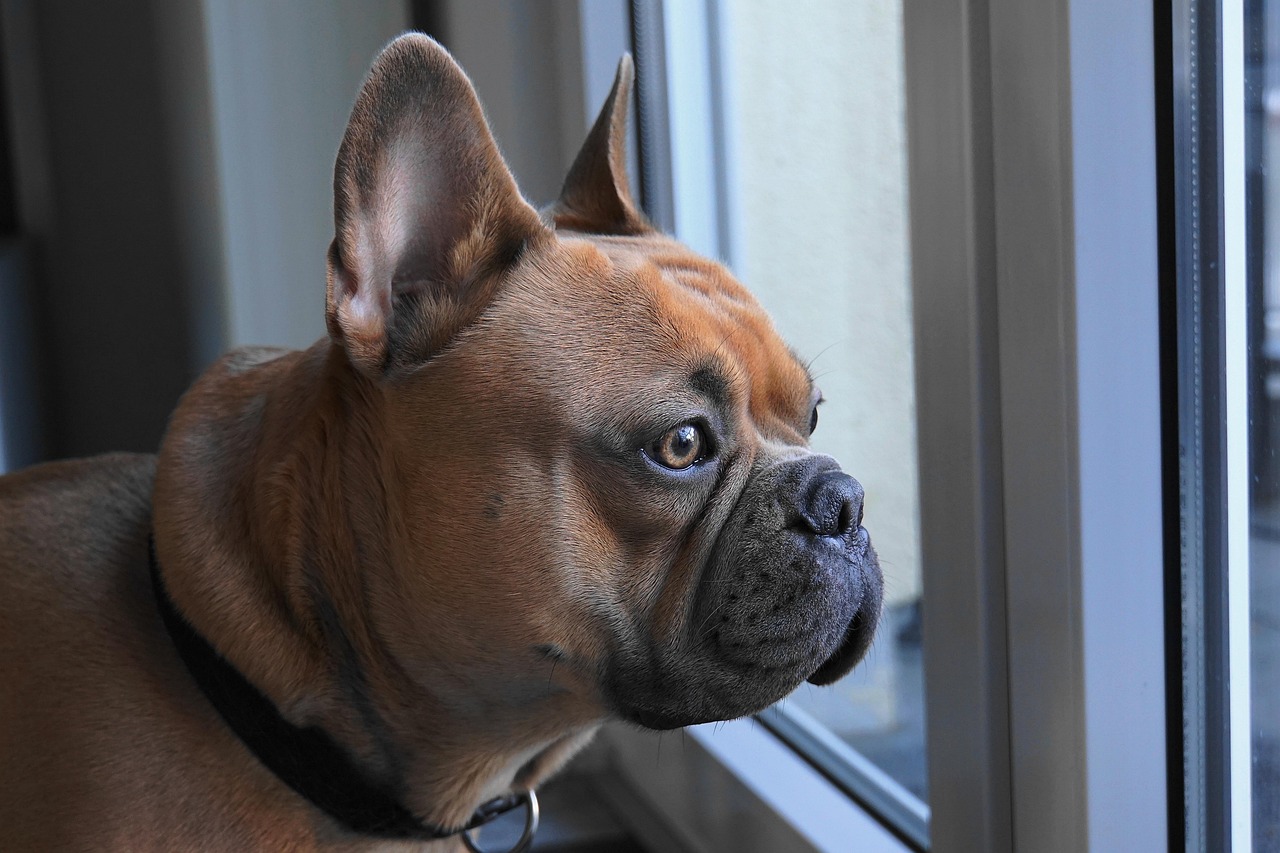
Separation anxiety in French Bulldogs is best addressed by building alone time in tiny, staged increments — starting with seconds, not hours — while keeping departures and returns deliberately boring. Because Frenchies are flat-faced, companion-bred dogs that bond hard to their people, they often escalate faster than other breeds, so the fix is patience plus a structured plan, not a single training session.
Why Are French Bulldogs So Prone to Separation Anxiety?
French Bulldogs were bred for centuries as lap companions, so being left alone runs against their instincts. Combine intense human bonding with a breed that follows you room to room, and you get a dog that treats your absence as a genuine crisis rather than a minor inconvenience.
Several breed traits stack on top of each other:
- Companion genetics. Frenchies were never working dogs left in a field or kennel. They were bred to be with people, which makes solitude feel unnatural.
- Single-person attachment. Many Frenchies pick one favourite human and orient their whole day around that person’s movements.
- Low exercise outlets. A brachycephalic dog can’t burn off anxious energy with a long run, so stress tends to come out as barking, pacing, or destructive chewing.
- Velcro behaviour. Following you to the bathroom is charming until it becomes panic when you close the front door.
There’s also a practical trap: because Frenchies are so portable and so pleasant to have around, owners take them everywhere. That’s lovely for bonding but it means the dog never learns that being alone is survivable. The skill has to be taught deliberately.
What Does French Bulldog Separation Anxiety Actually Look Like?
It’s rarely just barking. Watch for the full cluster:
| Behaviour | What It Looks Like | What It Signals |
|---|
—
| — |
|---|
High-pitched barking, howling, whining that starts within minutes of your exit
| The classic “dog barking separation anxiety” pattern |
|---|
Circling the door, hallway, or crate
| Inability to settle |
|---|
Door frames, blinds, crate trays
| Frustration and panic, not mischief |
|---|
Accidents from a normally clean dog
| Distress, not a training lapse |
|---|
Scratching or biting at doors and windows
| Genuine panic |
|---|
Frantic, prolonged greeting when you return | Over-attachment |
A key distinction: a dog that barks for ten minutes and then settles is often just protesting. A dog that barks, paces, and drools for an hour is genuinely panicking. The second needs a slower, more careful approach.
Is It Separation Anxiety or Just Boredom?
The two look similar from the hallway but need opposite responses. Boredom-driven barking tends to start later, is often directed at the window or garden, and stops when something interesting happens. True separation anxiety starts within minutes of your departure, is tied specifically to your absence, and doesn’t resolve until you return.
If your Frenchie only barks when the postman passes, that’s territorial or alert barking. If they bark when the house is silent and you’re gone, that’s the anxiety pattern. Getting this wrong wastes weeks — you can’t fix anxiety with more chew toys, and you can’t fix boredom with gradual desensitisation.
The Flat-Faced Factor
Brachycephalic dogs have narrower airways, which matters here in two ways. First, a Frenchie in a panic is breathing hard through an already compromised airway, so distress escalates physically faster. Second, anxious barking in a flat-faced dog can tip into respiratory distress more easily than in a longer-nosed breed. If your Frenchie is panting heavily, gagging, or turning blue at the gums during an episode, that’s a veterinary matter, not a training one.
Heat compounds this. An anxious Frenchie left in a warm room will struggle more than a cool one, so never leave them alone in a hot space while you’re working on this.
How Do You Start Building Alone Time Tolerance?
Start absurdly small. Begin with you stepping out of the room for five seconds and returning before your Frenchie reacts, then extend gradually over days and weeks. The goal is to rack up hundreds of “you left and nothing bad happened” repetitions before you attempt a real absence.
Here’s the concrete plan, tailored to a Frenchie’s short attention span and food motivation:
Week 1 — Out of sight, in the house
- Step into another room and close the door for 5 seconds. Return. Repeat 10 times.
- Extend to 15, then 30 seconds, then 1 minute across the week.
- Don’t make a fuss on return. No big greeting, no “I missed you.” Just walk back in and sit down.
- Reward calm, not the reunion. If your Frenchie is quiet when you re-enter, that’s the moment for a treat.
Week 2 — Door work
- Put on your shoes, pick up your keys, then sit back down. Do this repeatedly until these cues stop predicting a departure.
- Step outside the front door for 10 seconds. Return. Repeat.
- Build to 30 seconds, then 1 minute, then 3 minutes.
- Use a frozen stuffed toy or a food puzzle as you leave — Frenchies are food-motivated, and licking and chewing are genuinely calming.
Week 3 — Real absences
- Leave for 5 minutes. Return. Then 10, then 15, then 20.
- Vary the length so your Frenchie can’t predict it. Predictability feeds anxiety.
- Keep departures to under 30 minutes for this stage. Longer absences come later.
Week 4 onward — Extending and proofing
- Add 5–10 minutes per session, but drop back a step if barking returns.
- Practise at different times of day. Mornings are usually easier than evenings.
- Once you’re past an hour reliably, you can start building toward a normal working day.
The rule throughout: if your Frenchie barks, you moved too fast. Go back to the last successful duration and repeat it several times before pushing again.
Setting Up the Space
Where your Frenchie stays matters as much as how long. Options:
- Crate — good if your Frenchie already sees it as a safe den, terrible if they’ve learned to panic in it. Never use a crate as a punishment space.
- Pen or baby-gated room — a good middle ground for Frenchies who hurt themselves trying to escape crates.
- Free run of a dog-proofed room — works for calm dogs, risky for chewers.
Whichever you choose, add a worn t-shirt that smells like you, keep the room cool, and leave a radio or white noise on low. Leave the space boring otherwise — a dog with a view of the street has more to bark at.
What About Barking During the Night or When You’re Working?
Night-time and work-from-home barking usually has a different trigger: your Frenchie can hear or sense you and wants access. If they’re barking from another room while you’re home, that’s demand barking, and it’s fixed by never rewarding it — no calling out, no going to them mid-bark.
If they bark at night while you sleep, the fix is proximity fading: move their bed gradually further from yours over a couple of weeks, a foot at a time, rather than shutting them out abruptly.
For work calls, a stuffed food toy given before the call starts works far better than one handed over once the barking begins. Timing matters — the toy has to predict your unavailability, not follow the noise.
When Should You Get Professional Help?
Get a vet involved if your Frenchie is injuring themselves, soiling despite being fully trained, or showing physical distress during episodes. Because Frenchies are brachycephalic, prolonged panic is a genuine breathing risk, and a vet can assess whether medication support is appropriate alongside training. Some dogs need that bridge to make training possible at all.
A certified behaviourist is worth the cost if you’ve followed a gradual plan for several weeks with no improvement, if your Frenchie has injured themselves, or if the barking is severe enough to threaten your housing. This is also where general advice stops being enough — a dog with true clinical separation anxiety often needs a tailored programme, and no article can substitute for someone observing your specific dog.
If the anxiety appeared suddenly in an adult Frenchie with no history of it, book a vet visit before assuming it’s behavioural. Pain — including IVDD-related back pain, which Frenchies are prone to — can present as restlessness and vocalising that looks exactly like anxiety.
A Few Breed-Specific Things That Help
- Keep sessions short. Frenchies tire mentally fast. Ten minutes of focused alone-time practice beats an hour of drilling.
- Use food wisely. Their food motivation is your best tool, but avoid common Frenchie allergens like chicken if your dog has skin issues — a flare-up mid-training sets you back.
- Watch the skin folds. Stress and drooling can irritate folds around the face. Dry them after anxious episodes.
- Cool room, always. Overheating and anxiety feed each other in flat-faced dogs.
- Don’t add a second dog to fix it. Sometimes it helps, often the second dog just learns the same panic.
Building alone time tolerance in a French Bulldog is slow, unglamorous work measured in seconds and minutes before it’s measured in hours. The breed’s intensity cuts both ways: they bond hard, which is why the anxiety is real, and they’re food-driven and eager to please, which is why a patient, reward-based plan genuinely works. Start smaller than feels necessary, keep your exits boring, and let the quiet repetitions do the work.
Leave a Reply