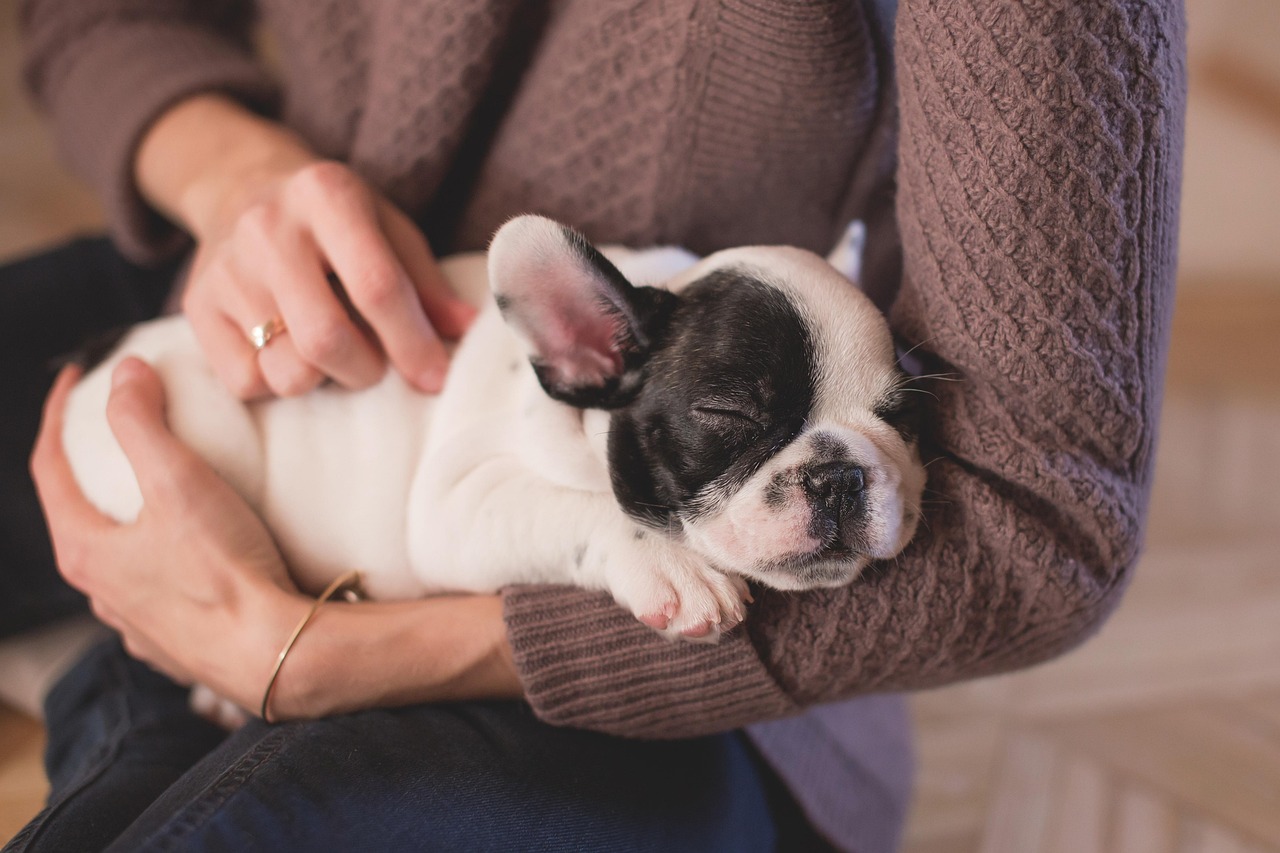
A healthy adult French Bulldog can manage about four to six hours alone during the day, and that’s the honest ceiling for most of the breed. Puppies under six months should not exceed one hour per month of age, and many Frenchies max out closer to four hours than six because of small bladders, flat-faced breathing, and a companion dog’s hardwired need for company. Anything past six hours regularly is where quiet distress, indoor accidents, and destructive chewing start showing up.
Those numbers aren’t a rulebook so much as a starting point. The real limit depends on your dog’s age, bladder, crate setup, the weather, and how much practice they’ve had being alone. Below is how to work out your own Frenchie’s number, and what to do when life demands more than the breed comfortably gives.
Why is alone time harder for a French Bulldog than for other dogs?
French Bulldogs were bred as companion dogs — lap dogs kept close to people, not working dogs left in a yard or a field. That history is baked into the breed. They bond intensely to their person, follow them room to room, and often choose physical contact over almost anything else. A Frenchie left alone isn’t just bored; it’s separated from the thing it was bred to do, which is be near you.
Two physical traits make it harder still. Frenchies are brachycephalic, so their breathing is less efficient. A dog that gets anxious and pants in a closed house can overheat and struggle for air faster than a longer-nosed breed would. And their bladders are small relative to many dogs their size, so the clock on “I need to go out” runs shorter.
The stubborn streak matters too. A Frenchie that decides it doesn’t want to be in a crate will not be reasoned with. It will bark, dig, or work at the door with single-minded persistence. That’s why alone-time training for this breed leans on patience and food rewards rather than force — a Frenchie that’s been pressured into a crate tends to dig its heels in harder.
How long can a French Bulldog puppy be left alone?
A French Bulldog puppy can be left roughly one hour per month of age, up to a ceiling of about four hours. A three-month-old manages around three hours; a five-month-old closer to four. Puppies also need more frequent toilet breaks than the age formula suggests, so plan on outings every two to three hours during the day.
| Puppy age | Maximum alone time | Toilet breaks needed |
|---|
—
| — |
|---|
45–60 minutes
| Every 1–2 hours |
|---|
About 3 hours
| Every 2–3 hours |
|---|
About 4 hours
| Every 3 hours |
|---|
4 hours
| Every 3–4 hours |
|---|
4–5 hours | Every 4 hours |
Puppies shouldn’t be left alone all day at any age. If you work full-time, arrange a midday visit from a walker or a family member for the first several months. Crate training and alone-time practice should start early and in short bursts — leaving a young Frenchie for a full workday before it has learned to settle is how crate barking and door-scratching habits get set. If your puppy is already barking in the crate, that’s a separate problem worth tackling directly rather than pushing through.
How long can an adolescent French Bulldog be left alone?
An adolescent Frenchie (roughly six to eighteen months) can usually handle four to five hours, but this is the age where tolerance often appears to go backwards. Teenage dogs get restless, test boundaries, and have more energy to burn — and a bored adolescent left too long is far more likely to redecorate your sofa than an adult.
Keep sessions structured. A brisk walk (not in the heat of the day) before you leave takes the edge off. A frozen stuffed toy or a food puzzle gives the food-motivated Frenchie something to work at. And keep practicing short absences even when your dog seems fine, because adolescence is when separation anxiety often first shows itself in this breed.
How do I tell if my Frenchie coped fine or panicked quietly?
A dog that coped fine is asleep or resting when you check the camera, has left its toys where they were, and greets you calmly at the door. A dog that panicked quietly may look fine in person but the footage tells a different story: pacing, panting, staring at the door, howling, or working at the crate bars.
Quiet distress is easy to miss because Frenchies don’t always make noise. Watch for these signs on a camera or through a neighbour:
- Pacing in loops or circling the door for long stretches
- Heavy panting in a cool room (a breathing and stress signal in this breed)
- Chewing door frames, crate bars, or baseboards
- Drooling or wet patches around the crate
- Refusing food or treats left for the day
- Toileting inside despite being house-trained
- Scratching at the exit until paws are sore
If you see several of these, your dog isn’t coping, even if the house is quiet. The difference between whining and true distress barking is worth understanding, because it changes how urgently you need to act.
What do I arrange if I’m out for an 8–10 hour workday?
No French Bulldog should regularly be alone for a full workday. Eight to ten hours is beyond the breed’s comfortable limit on every count — bladder, breathing, and companionship. If your schedule demands it, you need a plan that breaks up the day.
| Option | What it looks like | Best for |
|---|
—
| — |
|---|
One 30–60 minute visit and toilet break
| Most working owners |
|---|
Two to three days a week, not always five
| High-energy or very social Frenchies |
|---|
One partner leaves later, the other returns earlier
| Couples with flexible hours |
|---|
A lunchtime let-out and bit of company
| Local support networks |
|---|
Midday visit plus a longer evening check | Long or unpredictable days |
Daycare isn’t automatically the answer for every Frenchie. Brachycephalic dogs can overheat in rough-and-tumble group play, so choose a daycare that separates small or flat-faced dogs and monitors breathing. Some Frenchies find daycare overwhelming and do better with a quiet midday walker instead.
Does heat change how long I can leave my Frenchie?
Yes, significantly. A French Bulldog in a warm house, a conservatory, or a car — even briefly — is at real risk of overheating, and their flat face means they can’t cool themselves efficiently by panting. On hot days, treat your alone-time limit as shorter, not longer.
Never leave a Frenchie in a parked car at any temperature, even with windows cracked. At home, leave a fan or air conditioning running, keep blinds closed against direct sun, provide cool fresh water in a stable bowl, and avoid leaving your dog in a room that heats up through the day. If your home gets very warm and you can’t cool it, that’s a day to arrange daycare or a sitter rather than leave the dog to cope. Heatstroke in this breed can escalate quickly, and it’s a genuine emergency — if you suspect it, get veterinary help immediately rather than waiting to see.
When should a French Bulldog not be left alone at all?
Some Frenchies shouldn’t be left alone for any meaningful stretch until a problem is addressed. That includes dogs recovering from IVDD or back surgery, dogs with an active skin fold infection or eye issue like cherry eye that needs monitoring, dogs on restricted activity, and any dog showing severe separation anxiety — nonstop howling, self-injury, or panic that doesn’t settle.
If your dog has a medical condition, follow your vet’s specific guidance on confinement and activity; general advice can’t account for a post-surgical spine or a dog on medication. And if the anxiety is severe, a vet behaviourist or qualified trainer should be involved. Separation anxiety at that level rarely resolves by simply leaving the dog longer.
How do I build up my Frenchie’s alone time safely?
Stretch tolerance gradually, in small steps, and reward calm. Start with absences of a few minutes, return before your dog gets upset, and only increase once the current step is consistently calm. A rough schedule for a dog starting near zero:
Keep departures and returns low-key — no long goodbyes or excited reunions, which teach a dog that your leaving is a big event. Use the food motivation: a stuffed frozen toy or puzzle feeder at the moment you leave gives a Frenchie something to do and helps them associate your exit with good things. If your dog is barking in the crate specifically, address that separately, because crate frustration and true separation anxiety are fixed in different ways.
The number that matters most isn’t a breed average — it’s the one your dog can handle without distress. Watch the camera, respect the four-to-six-hour ceiling for most adults, and arrange help when your day runs longer. A Frenchie that’s calm, rested, and pleased to see you is a dog whose alone time is working.
Frequently Asked Questions
Q: Can a French Bulldog be left alone for 8 hours?
Not regularly. Eight hours exceeds the breed’s comfortable limit for bladder, breathing, and companionship needs. If your workday runs that long, arrange a midday walker, daycare, or a staggered schedule so your Frenchie isn’t alone the whole stretch.
Can I leave my French Bulldog alone while I’m at work?
Yes, but not for a full day. Most adult Frenchies manage four to six hours. For a standard workday, a midday dog walker or a couple of daycare days a week is the realistic setup. Puppies need far more frequent breaks.
Do French Bulldogs get separation anxiety easily?
They’re more prone to it than many breeds because they were bred as companion dogs and bond intensely. Quiet distress — pacing, panting, chewing at doors — is easy to miss, so check with a camera rather than assuming a quiet house means a calm dog.
Is it cruel to leave a French Bulldog alone all day?
Leaving any dog alone for a full workday, day after day, isn’t fair to a companion breed. Frenchies also overheat and struggle to breathe when stressed, so long solo stretches carry extra risk. Break up the day with a walker or sitter.
Should I crate my French Bulldog while I’m out?
A crate can be a safe den if your dog is properly crate-trained and comfortable in it. But a Frenchie that barks, digs, or panics in the crate shouldn’t be shut in for hours. Fix the crate issue first, or use a safe confined room instead.
Leave a Reply