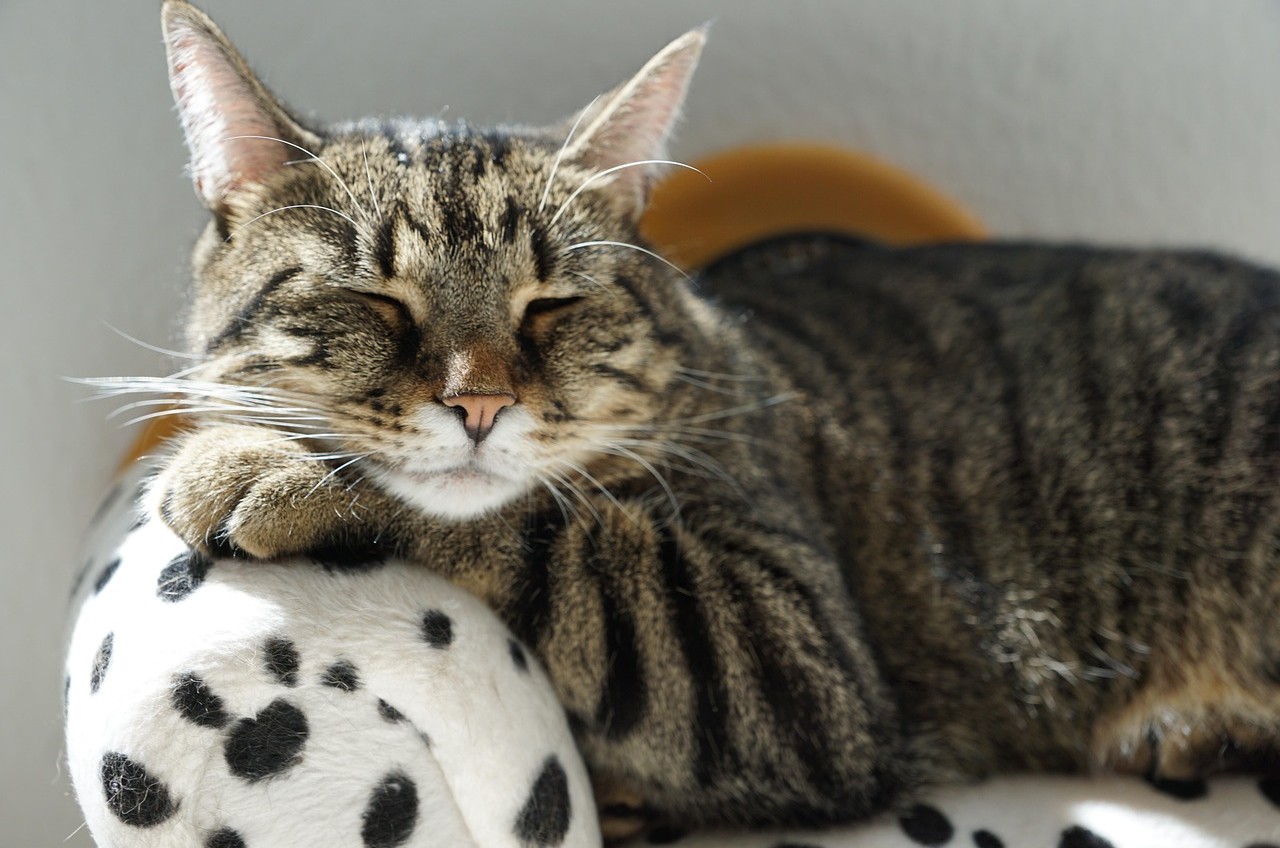
Yes — Siberian cats are genuinely large, and they take their time getting there. A healthy adult male typically weighs 5–9 kg (roughly 11–20 lb), females usually 3.5–6 kg (8–13 lb), and the breed can take three to five years to reach full size. That slow, extended growth is one of the most misunderstood things about living with one.
If you have only seen a Siberian kitten, you have not yet met the cat. A six-month-old Siberian often looks like a normal adolescent cat, then keeps filling out — broader chest, heavier bone, thicker ruff — well past the point where most cats have finished. Owners frequently report that their cat looked “done” at two and was noticeably bigger at four.
How big do Siberian cats get compared to other cats?
Siberians are among the larger domestic cat breeds, but they sit below the true giants. A typical domestic shorthair weighs around 4–5 kg; a well-grown male Siberian commonly exceeds that by 50% or more. They are not in the same bracket as the largest breeds, but they are unmistakably substantial — long-bodied, heavy-boned, and dense.
| Group | Typical adult male | Typical adult female | Notes |
|---|
—
| — | — |
|---|
4–5 kg
| 3–4 kg | Baseline comparison |
|---|
5–9 kg
| 3.5–6 kg | Slow-maturing, heavy bone |
|---|
7–11 kg+ | 5–8 kg | Siberians sit just below this |
Two things make Siberians seem even bigger than the numbers suggest. First, the semi-longhaired triple coat — guard, awn and undercoat — adds visible bulk, especially the neck ruff, britches and tail. A Siberian in full winter coat can look a full size larger than the same cat in summer. Second, they are long rather than tall; a lot of the weight is length of body and thickness of bone, which reads as “big” in a way that a scale alone does not capture.
Weight alone is a poor measure of whether an individual cat is the right size. A Siberian carrying too much fat and one carrying heavy muscle and bone can weigh the same. Body condition — ribs easily felt under a thin layer, a visible waist from above, a tucked belly — matters more than the number.
Why do Siberian cats take so long to reach full size?
Siberians are a slow-maturing breed, and that is deliberate rather than a sign of poor growth. Most cats reach adult size by around twelve months. Siberians keep developing for three to five years, with the most dramatic change between year one and year three.
The pattern tends to look like this:
- 0–4 months: rapid kitten growth, but still small for age compared with many breeds.
- 4–12 months: length increases noticeably; the cat starts to look rangy rather than chunky.
- 1–2 years: chest deepens, bone thickens, the ruff and tail coat come in properly.
- 2–4 years: final filling out — head, neck and body mass. Males often change most in this window.
- 4–5 years: fully mature. Some cats, particularly males, settle into their final weight here.
This has a practical consequence: a Siberian that looks thin at eighteen months is often perfectly normal, and a Siberian that looks enormous at two may still add a kilogram. If you are worried about your cat’s growth, the useful question is not “how much does a two-year-old Siberian weigh” but “is this individual gaining steadily and in good body condition.” Your vet can track that against a growth curve and physical exam — general ranges cannot tell you whether your cat is on track.
Is a big cat automatically a healthy cat?
No. Size is largely genetic and largely fixed, but weight on top of that frame is not. Because Siberians are large and heavily coated, extra fat is easy to miss — the coat hides the waistline, and owners who are used to a big cat may not register gradual gain.
Hypertrophic cardiomyopathy (HCM) is the breed’s main health concern, and it is a heart condition, not a weight condition — but it is worth knowing because it is screened for, not guessed at. Screening is by echocardiogram, and there is a known MYBPC3 gene variant associated with HCM in the breed. A DNA test can tell you whether a cat carries that variant; it cannot tell you whether the cat currently has HCM. Only imaging does that. If you are buying a kitten, ask what cardiac screening the parents have had, and understand that a clear DNA result is one piece of information, not a clean bill of health.
Other breed-relevant health areas worth keeping on your radar:
- Polycystic kidney disease (PKD) — cysts in the kidneys, screened by ultrasound.
- Hip dysplasia — less common than in some breeds but present; can affect how comfortably a large cat moves and jumps.
- Dental disease — common in cats generally, and easy to overlook in a breed with a heavy muzzle.
None of this is a reason to avoid the breed. It is a reason to buy from someone who screens, and to keep up with veterinary exams rather than relying on how the cat looks. A big cat that is carrying extra weight puts more load on joints and heart, so body condition is genuinely worth managing — but the target is a lean, muscular Siberian, not a small one.
Do Siberian cats need more space and more furniture than other cats?
Yes, in a practical sense. A large, athletic cat needs vertical territory that will actually hold it. Siberians climb well and like height — they want the top of the cat tree, the shelf above the door, the highest point in the room. A flimsy tree sized for a 4 kg cat will wobble or collapse under a 7 kg Siberian mid-leap.
What actually holds up:
- Cat trees with a wide, weighted base and platforms at least 40 cm across — narrow perches do not fit a long body.
- Wall shelves rated for the weight, fixed into studs or with proper anchors.
- Sturdy scratching posts — a big cat scratches with force, and a tall post lets it stretch fully.
- Wide window perches with strong suction or bracket mounting.
Also plan for the litter tray. A standard tray is cramped for a long-bodied cat; a large or extra-large open tray, or a big covered box, is more realistic. Many Siberians dislike a small, enclosed tray and will hang over the edge of one that is too tight.
How much does a Siberian cat actually eat?
More than a smaller cat, but less than owners often assume — and the amount shifts with age. A growing Siberian kitten has high energy needs; a mature, less active adult needs considerably less per kilogram. Free-feeding a slow-maturing breed through its long growth phase is a common route to an overweight adult.
A workable approach:
If your Siberian is gaining despite sensible portions, or losing weight without a change in diet, that is a veterinary conversation, not a feeding-tweak conversation.
What about the Neva Masquerade — is it bigger?
The Neva Masquerade is the colourpoint variety of the Siberian, not a separate larger breed. It carries the same body type, the same heavy coat, the same slow growth and the same size range. Some registries treat it as a colour variant of the Siberian; others recognise it separately. Either way, a Neva Masquerade male is still typically in the 5–9 kg bracket, and the care needs — grooming, vertical space, company, cardiac screening — are the same.
Are Siberian cats big enough to be a problem to live with?
For most people, no — but the size is real and it changes a few household decisions. A Siberian can reach countertops more easily, open lever-handled doors with more leverage, and knock over things a lighter cat would not. Plan for that rather than being surprised by it.
The bigger consideration is company. Siberians are sociable, people-oriented cats that follow their owners around, learn to fetch, and tolerate handling well. They generally do poorly with long stretches alone. A large, interactive cat that is bored and under-stimulated is more likely to get into things — and its size means it can get into more of them. Two cats, or a household where someone is home much of the day, suits the breed far better than a long-absent single-owner setup.
They also handle children well when interactions are supervised and gentle, which matters more with a big cat simply because of mass — a cat that weighs 7 kg and a toddler need an adult in the room.
And the coat is a genuine commitment. That triple coat means heavy seasonal shedding and real grooming demands: several sessions a week, daily during the spring and autumn blowouts. A large cat with a large coat is a large amount of hair.
The short version
Siberians are a big breed, but “big” here means long, heavy-boned and slow to finish rather than simply tall. Expect a male in the 5–9 kg range, a female in the 3.5–6 kg range, and three to five years before the cat is fully grown. Feed and furnish for the cat you will have at four, not the one you brought home at four months — and keep body condition, cardiac screening and grooming on the calendar, because a large frame deserves the same attention as a small one.
Frequently Asked Questions
Q: Are Siberian cats bigger than Maine Coons?
No. Siberians are a large breed, but Maine Coons are generally heavier and taller. A typical adult male Siberian is around 5–9 kg, while large Maine Coon males commonly exceed that. Siberians are still well above the average domestic cat in size, bone and coat volume.
How much should a Siberian cat weigh at one year old?
There is no single correct number, because Siberians mature slowly and individuals vary widely. Many are still visibly filling out at one year and will keep gaining for another two to four years. Body condition matters more than the scale — your vet can assess ribs, waist and overall growth at the annual exam.
Are Siberian cats good for small homes or apartments?
They can be, provided you give them vertical territory — a sturdy cat tree, wall shelves and high perches — and enough company. Their size means furniture needs to be genuinely weight-rated, and their sociable nature means long daily absences suit them poorly. Space matters less than height and interaction.
Do Siberian cats shed a lot because they are big?
Yes. The breed has a dense triple coat of guard, awn and undercoat, and it blows heavily in spring and autumn. Expect brushing several times a week year-round and daily during shedding seasons. A larger cat also means more total coat to manage than a smaller breed.
Are Siberian cats really hypoallergenic?
They are often marketed that way because they tend to produce lower levels of the Fel d 1 protein in saliva, but no cat is truly allergen-free. Reactions vary a lot between people. Spend time with an adult Siberian before committing if allergies are a factor for your household.
More Siberian cat answers on this topic
How big do Siberian forest cats get compared to other breeds?
Siberians are a large breed but not the largest. A healthy adult male usually falls between 12 and 20 pounds, with females roughly 8 to 14 pounds. For comparison, a typical domestic shorthair runs 8–12 pounds regardless of sex, and a Maine Coon male can push past 20 pounds. Siberians sit firmly in the “large but not giant” category — closer to a Norwegian Forest Cat in build than to a Maine Coon.
What makes them read as bigger than their weight is structure. Siberians have a barrel-shaped chest, heavy bone, and a rounded, wedge-shaped head with a slightly curved profile. They also carry a thick undercoat plus a longer, weather-resistant topcoat, and a full winter ruff around the neck. A Siberian in full winter coat can look a third larger than the same cat in summer.
| Breed | Male weight | Female weight | Height at shoulder |
|---|
—
| — | — |
|---|
12–20 lb (5.5–9 kg)
| 8–14 lb (3.5–6.5 kg) | 9–11 in |
|---|
13–22+ lb
| 9–16 lb | 10–16 in |
|---|
12–16 lb
| 9–12 lb | 9–12 in |
|---|
8–12 lb | 6–10 lb | 8–10 in |
Note that height at the shoulder is a rough estimate for all of these — most owners never measure it, and coat thickness makes it hard to judge by eye.
How long does a Siberian forest cat take to reach full size?
Siberians are slow maturers. Most cats reach adult size around 12 months, but Siberians keep filling out until they’re 3 to 5 years old. A one-year-old Siberian that looks lanky and slightly unfinished is completely normal — that’s the awkward adolescent stage. The chest deepens, the head broadens, and the coat thickens considerably over the next two to three years.
This matters practically. If you bring home a year-old Siberian and it seems smaller than the breed standard suggests, don’t assume you were misled. Give it another two years and a proper diet before drawing conclusions. It also means that if you’re feeding a young Siberian, you’re feeding a cat that’s still growing for years — not months.
A rough growth timeline
- 0–4 months: Rapid growth. Kittens roughly double birth weight in the first week or two, then gain steadily.
- 4–12 months: Length and height mostly achieved. Looks leggy.
- 1–2 years: Chest and shoulders broaden. Coat starts to fill in properly.
- 2–5 years: Final muscle and bone density. This is when a male often hits his true adult weight.
What actually determines how big your Siberian gets?
Genetics set the ceiling. Diet, neuter status, and activity determine whether a cat reaches that ceiling or falls short of it. A Siberian from large parents who’s fed a protein-appropriate diet and kept lean will land near the top of the range. The same cat fed a carbohydrate-heavy diet and allowed to become sedentary will often end up lighter in muscle and heavier in fat — a different body composition entirely.
Neutering matters more than most people realize. Cats neutered before puberty tend to have slightly longer bones and a tendency toward weight gain, because sex hormones influence growth plate closure and metabolism. This is one reason two littermates can end up looking quite different as adults.
Why protein matters for a cat this size
Cats are obligate carnivores. They have no dietary requirement for carbohydrate and a high, fixed requirement for animal protein — roughly double what a dog of similar size needs per pound of body weight. A large breed like the Siberian needs that protein to build and maintain muscle mass, especially during the multi-year growth window. If you’re feeding a diet where protein is diluted with fillers, you’re not going to get the same physical result even with identical genetics.
Portioning is where owners of big cats get into trouble. A Siberian’s “ideal” portion is not the same as a domestic shorthair’s, and the feeding guide on the bag is a starting point, not a prescription. Weigh your cat monthly and adjust. [LINK: how much should I feed my cat]
Is my Siberian overweight, or just big?
This is the question that trips up almost every large-breed cat owner. A 17-pound Siberian male may be perfectly lean, while a 13-pound female carrying extra fat around the abdomen is genuinely overweight. Weight alone tells you very little without a body condition score.
Run your hands along your cat’s ribs. You should feel them easily under a thin layer of fat, like the back of your hand. From above, there should be a visible waist behind the ribs. From the side, the belly should tuck up toward the hind legs. If you can’t feel ribs without pressing, or the waist has disappeared, the cat is carrying excess fat regardless of what the scale says.
Obesity in cats is not cosmetic. It raises the risk of diabetes, worsens osteoarthritis (which is common and badly under-diagnosed in older cats), and makes grooming harder for a breed that already has a demanding coat. It also complicates anesthesia if your cat ever needs dental work — and Siberians, like most cats, are prone to dental disease.
A practical monthly check
How big is too big — and when does size signal a problem?
There’s no upper limit that’s automatically a health problem, but change in size is a signal. A cat that suddenly looks thinner despite eating normally needs a vet visit. A cat that gains weight rapidly without a diet change does too.
Cats hide illness extremely well, so subtle shifts are often the only early clue. The signals worth watching:
- Appetite change — eating more while losing weight is a classic sign of hyperthyroidism, common in middle-aged and older cats.
- Litter box changes — drinking and urinating more can point to chronic kidney disease or diabetes. Straining to urinate, especially in males, is an emergency; a blocked bladder can be fatal within a day.
- Muscle loss along the spine — a bony, prominent spine with a sagging belly often means muscle wasting, not just weight loss. This is a common presentation of osteoarthritis and other chronic disease in older cats.
- Hiding, reduced grooming, or a dull coat — Siberians are fastidious groomers. A Siberian that stops maintaining its coat is telling you something.
None of this is diagnostic. If you see these signs, book a vet appointment — this article is general information, not medical advice, and no amount of reading replaces an exam and bloodwork.
Does coat thickness make Siberians look bigger than they are?
Yes, considerably. The Siberian’s coat is triple-layered: a dense, oily undercoat for insulation, an awn hair middle layer, and a longer, coarser topcoat that sheds water. In winter, the ruff around the neck and the “britches” on the hind legs can make a cat look substantially heavier than its actual weight.
This has two practical consequences. First, don’t judge your cat’s body condition by silhouette alone in winter — use your hands. Second, coat maintenance is real work. Siberians need brushing several times a week, and daily during seasonal shedding. Matting behind the front legs and around the ruff is common if you skip it, and mats pull on skin and cause genuine discomfort.
A matted cat may also stop grooming properly, which is one of those subtle illness signals mentioned above. Keep the coat in good shape and you’ll have a clearer view of your cat’s actual condition.
Do Siberians need more space and food than a regular cat?
They need more of some things and less of others. Floor space isn’t the issue — vertical space is. A large, athletic cat needs tall scratching posts, sturdy cat trees rated for heavier weights, and shelves or perches high enough to feel secure. Cheap cat furniture wobbles under a 16-pound cat, and a wobbly perch gets avoided.
Food-wise, a larger cat eats more, but the more important variable is protein density. Feed to body condition, not to the bag’s suggestion, and split meals into at least two or three servings a day. Free-feeding a large-breed cat is a fast route to obesity, and unlike dogs, cats don’t do well on “just eat less” crash diets — rapid weight loss in cats can trigger hepatic lipidosis, a serious liver condition. Weight loss in cats should be gradual and ideally vet-guided.
Enrichment for a big, capable cat
Siberians are active, intelligent, and good climbers. They need:
- Vertical territory — floor-to-ceiling posts, wall shelves, or a tall tree with a stable base.
- Scratching surfaces — sisal and cardboard, tall enough for a full stretch. Scratching is marking and stretching, not misbehaviour.
- Hunting-style play — wand toys that mimic prey movement, in short sessions a few times a day. This is how you burn energy and reduce stress.
- Routine — cats are territorial and routine-driven. Big changes (a move, a new pet, new furniture) can trigger hiding, spraying, or litter box avoidance in any cat, and a sensitive breed will feel it more.
Leave a Reply