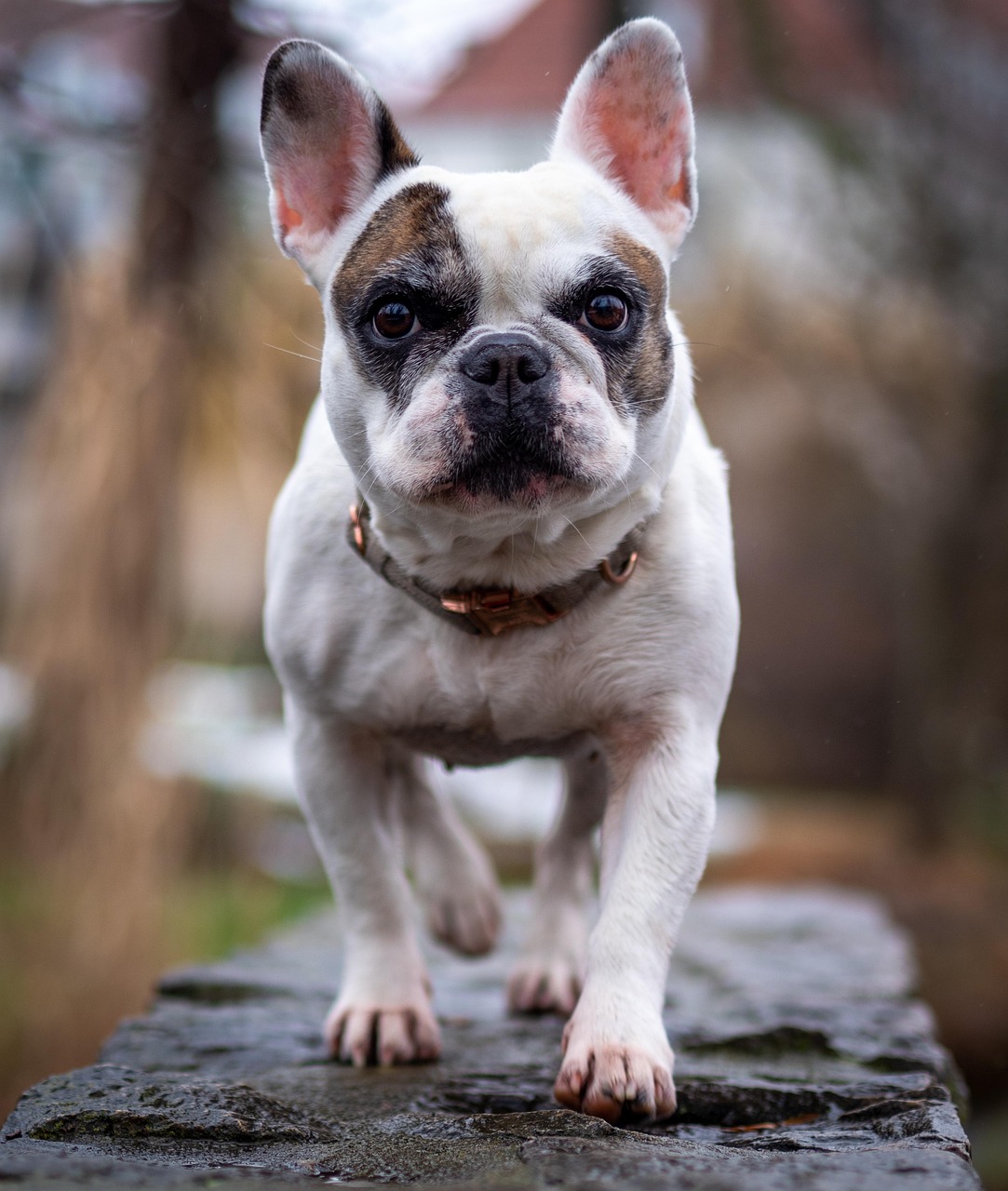
A French Bulldog cannot eat chocolate, grapes, raisins, onions, garlic, xylitol, macadamia nuts, alcohol, or caffeine — these are toxic and can be fatal. Beyond these common toxins, your Frenchie also needs to avoid foods that trigger their breed-specific issues: high-fat foods that risk pancreatitis, common allergens like chicken and beef, and anything that could cause choking or bloat given their flat faces and deep chests.
That’s the short answer. The longer answer matters because a Frenchie’s margin for error is thinner than most breeds’. At 16–28 pounds, a single grape can be enough to cause acute kidney failure. Their compressed airway means a chunk of cheese that a labrador swallows without thinking can lodge in the throat. And their breed predisposition to pancreatitis means one greasy plate left within reach can turn into a hospital stay. Here’s the full breakdown, organized by risk level, so you know exactly what to keep off their plate — and what to do in the first ten minutes if something slips past you.
What Human Foods Are Toxic to French Bulldogs?
Toxic foods cause direct harm — organ failure, seizures, or death — even in small amounts. What makes them different from “rich” or “unsafe” foods is that there’s no safe portion to work with. The mechanism matters, because it tells you how fast you need to move.
| Toxic Food | Active Compound | What Happens | Safe Amount? |
|---|
—
| — | — |
|---|
Theobromine, caffeine
| Vomiting, seizures, cardiac arrest | None — even a small square of dark chocolate is dangerous |
|---|
Unknown (possibly tartaric acid)
| Acute kidney failure | None — toxicity varies by dog, so assume any amount is unsafe |
|---|
Thiosulfate
| Destroys red blood cells, leading to anemia | None — includes powder in sauces and broths |
|---|
Artificial sweetener
| Rapid insulin spike, hypoglycemia, liver failure | None — check peanut butter and gum labels |
|---|
Unknown
| Weakness, tremors, hyperthermia | None |
|---|
Ethanol
| Respiratory failure, coma | None — includes raw dough that ferments into alcohol |
|---|
Methylxanthines | Heart arrhythmias, tremors | None — coffee, tea, energy drinks, diet pills |
A few of these deserve more than a table row, because the mechanism changes what you watch for.
Chocolate is a dose problem, not an all-or-nothing one, but for a Frenchie the dose is small. Theobromine is a stimulant the dog’s body metabolizes very slowly, so it keeps circulating and overstimulating the heart and nervous system. Dark chocolate and baking chocolate carry far more theobromine than milk chocolate; white chocolate carries almost none but is still high in fat, which brings its own risk. Signs usually show up within a few hours — restlessness, panting that’s heavier than their normal noisy breathing, vomiting, a racing or irregular heartbeat. In a breed that already struggles to cool itself, that extra panting is a genuine emergency, not a wait-and-see.
Grapes and raisins are the most frustrating toxin on the list because we still don’t know the exact compound. Some dogs eat a handful and are fine; others go into kidney failure from a single grape. Because you can’t predict which dog yours is, treat every exposure as serious. Watch for vomiting within a few hours, then reduced urination or no urination over the following day — that’s the kidney signal, and it’s often too late by the time it’s obvious.
Onion and garlic damage red blood cells so they burst, which causes anemia that can take a day or two to show. Powdered forms are more concentrated than fresh, and they hide in places owners don’t check: jarred pasta sauce, gravy granules, stock cubes, rotisserie chicken seasoning, some baby foods, and deli meats. A small amount in a one-off bite is usually tolerated; repeated small amounts add up.
Xylitol is the one that catches people out because it’s in products marketed as healthy. It triggers a massive insulin release, so blood sugar crashes within 30–60 minutes — wobbliness, collapse, seizures. At higher doses it attacks the liver. Check every peanut butter, sugar-free gum, mint, toothpaste, and “diet” baked good label. If the ingredients list xylitol, birch sugar, or sugar alcohol, it doesn’t come into the house.
If your Frenchie eats any of these, call your emergency vet immediately. Do not induce vomiting unless a vet tells you to — for some toxins, like xylitol, vomiting can cause aspiration, and for others, like chocolate, the timing matters. For a deeper look at how diet fits into the breed’s overall health picture, see our guide to what makes a good diet for French Bulldogs.
Why Are French Bulldogs More Prone to Food Allergies?
French Bulldogs are one of the most allergy-prone breeds, with environmental and food allergies affecting a significant portion of the breed. The most common food allergens for Frenchies are chicken, beef, dairy, and eggs — not the exotic proteins you might expect. If your Frenchie is constantly licking their paws, scratching their ears, or getting recurring skin fold infections between their facial wrinkles, food allergies are a likely culprit.
The tricky part is that symptoms don’t appear immediately. Your Frenchie could eat chicken for months before showing signs. This delayed reaction makes it hard to pinpoint the trigger without an elimination diet. If you suspect a food allergy, work with your vet to do a strict 8-week elimination diet using a novel protein like rabbit or kangaroo. During this time, your Frenchie can only eat the prescribed food and water — no treats, no chews, no table scraps.
Two things sabotage elimination diets more than anything else. The first is treats: a single training biscuit with chicken meal in it resets the clock. The second is the food bowl itself — if you’ve been feeding a chicken-based kibble for years, the bowl and any rubber toys hold residue, so wash them properly at the start. Keep a simple log of what you feed and what the skin and ears look like week by week; eight weeks is long enough that you’ll forget the baseline otherwise.
What Foods Cause Pancreatitis in French Bulldogs?
Pancreatitis is inflammation of the pancreas, and French Bulldogs are genetically predisposed to it. High-fat foods trigger it. This includes fatty meat trimmings, fried foods, butter, and even some “healthy” foods like avocado and nuts. A single high-fat meal can cause an acute attack that requires hospitalization.
The mechanism is worth understanding: the pancreas produces digestive enzymes, and a flood of fat signals it to release a large batch at once. In a predisposed dog, those enzymes activate inside the pancreas instead of in the gut and start digesting the organ itself. That’s why the onset is often dramatic and why it isn’t something you can wait out at home.
Symptoms of pancreatitis in a Frenchie include vomiting, abdominal pain (they may stand with their front legs down and rear end up), fever, and lethargy. If you see these signs after your Frenchie ate something fatty, get to the vet fast. Chronic pancreatitis can also develop from repeated exposure to high-fat foods, leading to permanent digestive issues.
The fat content in your Frenchie’s regular kibble should be under 18% on a dry matter basis. If you’re feeding a high-fat food for weight gain, do it under veterinary guidance — not by adding bacon grease or butter to their bowl. And be honest with yourself about the usual culprits: the last bite of a burger, the cheese rind, the Sunday roast pan. Those are the meals that land Frenchies in the clinic.
What Foods Are Choking Hazards for Flat-Faced Dogs?
French Bulldogs have brachycephalic skulls — their airways are compressed, their soft palates are elongated, and their tracheas are narrow. This means choking is a real, immediate risk. Foods that a labrador might swallow whole can get stuck in a Frenchie’s throat.
High-risk choking foods for Frenchies:
- Rawhide chews (they soften into a gummy mass that can lodge in the airway)
- Large chunks of meat or cheese (always cut into pea-sized pieces)
- Whole carrots or apples (grate them instead)
- Corn on the cob (the cob doesn’t digest and can cause intestinal blockage)
- Bones — cooked or raw — which can splinter or get wedged
Even if a food isn’t toxic, if it’s a choking risk, it’s a “cannot eat” food for your Frenchie. Their flat face also means they can’t pant effectively while eating, so they may try to gulp air along with food, increasing the risk of bloat (gastric dilatation-volvulus). While Frenchies have a lower bloat risk than deep-chested breeds, it still happens. Feed your Frenchie from a slow feeder bowl and discourage gulping.
The flat face also changes how you should respond to choking. A Frenchie can’t move air well at the best of times, so a partial blockage that a longer-nosed dog would cough out can become a full airway emergency in seconds. If your Frenchie is pawing at their mouth, making a high-pitched wheeze instead of a normal cough, or their gums are turning grey or blue, that’s a vet trip now — not a “let’s see if it passes” situation. If you want to understand the underlying anatomy better, our breakdown of breathing problems and BOAS signs in French Bulldogs explains what’s happening inside that airway.
Gas is the milder cousin of this problem. Frenchies swallow air when they eat fast, and their short digestive tract means that air has to go somewhere. Chronic gassiness is usually a feeding-mechanics issue rather than a food issue: slow feeder bowl, smaller and more frequent meals, no exercise for an hour after eating, and no bowl raised off the floor at a height that encourages gulping.
Can French Bulldogs Eat Fruits and Vegetables?
Yes — many fruits and vegetables are safe and healthy for French Bulldogs, but the list of unsafe ones is specific. Safe options include blueberries, strawberries, banana slices, cucumber, green beans, and pumpkin (cooked, plain). These make great training treats because Frenchies are highly food-motivated, and these low-calorie options won’t pack on the pounds.
Unsafe fruits and vegetables for Frenchies:
- Grapes and raisins (toxic, as listed above)
- Avocado (contains persin, plus high fat content)
- Cherries (pit contains cyanide; flesh is fine but risky to prepare)
- Tomatoes (green parts contain solanine)
- Mushrooms (some wild varieties are toxic)
- Corn on the cob (choking hazard, not toxic)
When feeding fruits, always remove seeds and pits. Apple seeds contain cyanide, and while a single seed won’t kill your Frenchie, repeated exposure adds up. Cut everything into small, manageable pieces — remember, your Frenchie’s jaw is shorter and their bite is less efficient than other breeds.
Portion rules keep this simple. A safe fruit or veg treat should be about the size of a pea to a blueberry for a Frenchie, and treats overall shouldn’t exceed roughly 10% of their daily calories. If you’re not sure what that number is for your dog, our French Bulldog feeding calculator turns your dog’s weight, age, neuter status and body condition into daily calories, grams and cups — and gives you a goal weight if they need to slim down. For the day-to-day numbers, how much a French Bulldog eats per day is the companion piece.
What Should I Do If My Frenchie Eats Something They Shouldn’t?
Time is critical, but panic makes it worse. Follow these steps in order:
- Identify the food and estimate the amount. Check the packaging or what’s left on the floor. For chocolate, note the type (dark, milk, white) — dark chocolate has the highest theobromine content.
- Call your vet or the ASPCA Animal Poison Control Center (888-426-4435). Have your Frenchie’s weight ready. There may be a consultation fee, but it’s worth it.
- Do not induce vomiting unless explicitly told to. For some toxins, like xylitol, vomiting can cause a rapid drop in blood sugar that’s worse than the initial poisoning. For caustic substances, vomiting causes more damage on the way up.
- Monitor for symptoms for 24 hours. Even if your Frenchie seems fine, some toxins (like grapes) have delayed effects. Watch for vomiting, diarrhea, excessive drooling, lethargy, or changes in gum color.
- Bring the packaging or a sample of the food to the vet. This helps them determine the exact toxin and dose.
For a French Bulldog, breathing is already compromised. Any toxin that causes vomiting or seizures increases the risk of aspiration pneumonia — vomit entering the lungs. This is why professional guidance is non-negotiable.
What to have ready before you call. The vet or poison line will ask the same questions every time, and having answers ready saves minutes:
- Your Frenchie’s weight (ideally from a recent weigh-in, not a guess).
- What they ate, and roughly how much — “about a quarter of a 200g bar of 70% dark chocolate” is far more useful than “some chocolate.”
- When they ate it. Timing drives the treatment decision.
- What they’ve done since — vomiting, drooling, wobbling, panting harder than usual, or nothing at all.
- Any existing conditions or medications, especially if your Frenchie is on a prescription diet or has a history of pancreatitis.
What to watch for at home over the next 24 hours. Vomiting, diarrhea, drooling more than normal, lethargy, restlessness, panting that doesn’t settle, wobbliness, tremors, or gums that look pale, grey, or blue rather than pink. Take a photo of the gums if you’re unsure — you’ll want the comparison later. If your Frenchie is breathing harder than their baseline, that’s a red flag in this breed regardless of what they ate.
What Treats Are Safe for French Bulldogs?
Given their food motivation, you need a rotation of safe treats for training. French Bulldogs respond brilliantly to reward-based training — they’re stubborn but eager to work for food. Here are safe options:
| Treat Type | Examples | Notes |
|---|
—
| — |
|---|
Zuke’s Mini Naturals, Blue Buffalo Bits
| Look for low-fat, limited-ingredient options |
|---|
Blueberries, banana slices, apple pieces (no seeds)
| Freeze for a cooling treat in hot weather |
|---|
Cucumber, green beans, steamed carrots
| Crunchy texture helps with mild dental cleaning |
|---|
Plain cooked chicken (if not allergic), boiled turkey, freeze-dried liver
| Avoid chicken if your Frenchie has a known allergy |
|---|
Yak milk chews, bully sticks (supervised) | Avoid rawhide entirely |
For Frenchies with known allergies, read every label. Many commercial treats contain chicken meal or beef by-products even when they’re not the main ingredient. If your Frenchie is on an elimination diet, stick to single-ingredient treats only.
A few treat rules that save a lot of trouble:
- Break treats small. A “mini” training treat is still often too big for a Frenchie. Snap it into three or four pieces; you get more repetitions per biscuit and fewer calories per reward.
- Count treats in the day’s calories. Ten small treats can be a meaningful chunk of a 16-pound dog’s daily intake.
- Match the treat to the moment. High-value (freeze-dried liver) for recall and nail trims; low-value (cucumber, green beans) for routine repetitions.
- Never leave a chew unattended. Bully sticks and yak chews are fine under supervision and taken away once they soften to a nub.
- Watch the treat-to-training ratio. If your Frenchie is food-obsessed, that motivation is a training asset — see our complete guide to training a French Bulldog puppy for how to use it without overfeeding.
Can French Bulldogs Drink Milk?
Most French Bulldogs are lactose intolerant. While puppies produce lactase to digest their mother’s milk, most dogs lose this enzyme after weaning. Giving your Frenchie a bowl of milk will likely result in diarrhea, gas, and stomach upset within a few hours. Plain yogurt with live cultures is sometimes better tolerated because the bacteria break down some of the lactose, but it’s still not necessary.
Water is the only drink your Frenchie needs. If you want to offer something different, try low-sodium chicken broth (check it doesn’t contain onion or garlic powder) or bone broth specifically made for dogs. Avoid anything with artificial sweeteners, especially xylitol.
One Frenchie-specific note on hydration: because they overheat easily and can’t pant efficiently, water intake matters more than it does for a longer-nosed breed. If your Frenchie turns their nose up at milk substitutes, that’s fine — just make sure the water bowl is clean, refreshed, and available after every walk and play session.
The Bottom Line on What a Frenchie Can’t Eat
Toxins first, breed risks second, portions third. Chocolate, grapes, raisins, onions, garlic, xylitol, macadamia nuts, alcohol, and caffeine are absolute noes. High-fat foods, chicken and beef if your dog is allergic, and anything that can lodge in a flat-faced throat are the next tier. Everything else is a portion question — pea-sized pieces, treats under roughly 10% of daily calories, and nothing left unsupervised.
If your Frenchie has a sensitive stomach, a history of pancreatitis, or skin issues you’ve never fully pinned down, it’s worth reading our honest breed guide to French Bulldog ownership alongside this — diet is one thread in a breed that needs a bit more management than most. And if you’re weighing up a raw diet, our piece on whether French Bulldogs can eat raw covers the risks and benefits specifically for this breed.
Leave a Reply