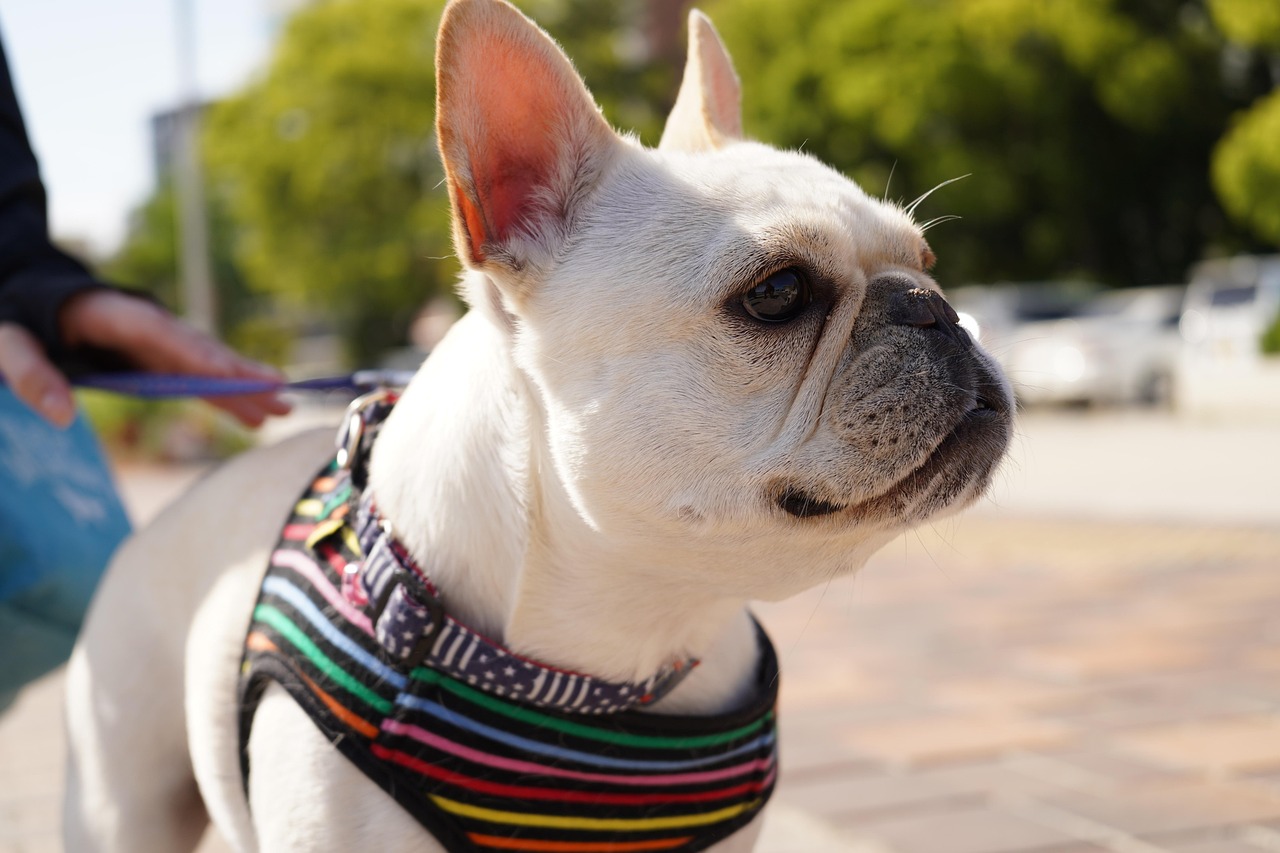
To train a French Bulldog puppy, start with short, reward-based sessions of 5–10 minutes, several times a day, beginning the moment you bring them home. Focus on potty training, crate comfort, and basic cues like sit and come, using food treats as your main motivator. Keep sessions cool, calm, and consistent — Frenchies are stubborn, food-obsessed, and sensitive to heat, so patience and timing matter more than repetition.
That’s the short answer. The longer answer involves understanding why French Bulldogs train differently from, say, a Border Collie or a Labrador. They’re not disobedient — they’re independent, easily distracted by their own comfort, and physically limited in ways that change how you should approach everything from walks to weaning off treats. This guide is the hub for the whole process, from the first week home to the six-month mark, and it points out to the deeper guides on crate training, potty training, barking and zoomies as you need them.
The Four Behaviours That Actually Matter First
Before you buy a clicker or print a list of twenty commands, know this: a French Bulldog puppy only needs four things nailed down in the first few months. Everything else can wait.
Sit, down, stay, loose-leash walking and every cute trick on YouTube can come later. Get these four right and the rest is decoration.
What to Ignore for Now (And Why That’s Fine)
New owners often try to teach everything at once and end up with a puppy who’s confused and a human who’s frustrated. Deliberately park these for later:
- Perfect loose-leash walking. A 10-week-old Frenchie has the attention span of a gnat and a flat face that makes pulling genuinely uncomfortable. Teach them to walk beside you on a loose lead in the house and garden first; street manners come at 5–6 months.
- “Stay” beyond a few seconds. Duration work needs impulse control your puppy doesn’t have yet. A two-second stay with you one step away is plenty at this age.
- Tricks and party pieces. Roll over, spin, paw — fun, but they eat into the five minutes you have before your puppy’s brain switches off.
- Greeting strangers politely. Socialisation exposure matters enormously (see below), but formal “sit to greet” manners can wait until the puppy is less excitable around new people.
- Anything involving duration, distance or distraction. Those are the three Ds of advanced training. At 8–16 weeks you’re working on the behaviour itself, not proofing it.
If you’re ever unsure whether you’re asking too much, ask yourself: could a tired toddler do this? If not, it’s a job for a older puppy.
When Should You Start Training a French Bulldog Puppy?
Start training the day your French Bulldog puppy comes home, usually around 8 weeks old. You don’t need formal commands yet — the first goals are potty routine, name recognition, and getting comfortable in a crate. Formal obedience can begin at 9–10 weeks once your puppy has settled into a routine.
The First 72 Hours
Your puppy has just been separated from their littermates. That’s a big deal for a breed that bonds intensely and is prone to separation anxiety later in life. The first three days are about security, not commands.
- Set up a small, draft-free space with a crate, a bed, and pee pads near the door.
- Take them out every 45–60 minutes while awake, plus immediately after waking, eating, and playing.
- Say their name before every meal and reward eye contact. This builds the foundation for recall later.
- Don’t invite visitors yet. A calm, quiet household for 48 hours makes training dramatically easier.
Weeks 1–2: Routine Over Rules
Frenchies thrive on predictability. Set feeding times, potty times, nap times, and bedtime at the same clock hours daily. A puppy on a schedule potty trains roughly twice as fast as one on a free-for-all.
The Week-by-Week Training Plan
This is the spine of the whole thing. Treat it as a rough map, not a contract — puppies don’t read calendars — but it gives you a clear sense of what to work on and when to stop worrying about the rest.
Weeks 1–2: Settling In
- Name recognition and eye contact before meals
- Potty routine on the clock (every 45–60 minutes while awake)
- Crate introduced with food and a worn t-shirt that smells like you
- Handling practice: touch paws, ears, mouth and tail daily
- No formal cues yet. No visitors. Sleep is the priority.
Weeks 3–4: First Cues
- “Sit” lured with a treat over the nose
- “Come” practised indoors at two paces, rewarded every single time
- Crate door closed for short stretches while you sit nearby
- Begin sound exposure at low volume (vacuum in another room, doorbell recording)
- Potty trips stretch to every 60 minutes while awake
Weeks 5–6: Adding Distraction
- “Leave it” introduced with a treat in a closed fist
- “Drop it” with a toy trade
- Sit and come practised in the garden, then the front step
- First calm, vaccinated adult dog meetings
- Crate sessions up to 15 minutes with you out of the room
Weeks 7–8: Proofing Indoors
- Sit with mild distractions (you holding a toy, someone walking past)
- Come from another room
- Crate overnight next to your bed
- Handling by a second person, including someone in a hat or with a beard
- Bite inhibition improving — redirect to a toy every time teeth touch skin
Weeks 9–12: Out in the World
- Carry your puppy in public (see socialisation below) rather than walking on unknown ground
- Practise sit and come on grass, gravel and tile
- Loose-lead walking introduced in the garden
- Potty training should be largely reliable indoors; accidents become the exception
- Transition off indoor pee pads by 12 weeks if the weather allows
Months 4–6: Real Life
- Sit, come and leave it with real-world distractions
- Loose-lead walking on quiet streets
- Crate comfortable for an hour or two
- Potty trained, with the odd regression during growth spurts
- Begin short, cool-weather walks with training stops built in
Months 6–9: The Regression Phase
Expect your previously reliable Frenchie to “forget” everything. This is adolescence, not defiance. Go back to shorter sessions, higher-value rewards and easier versions of each behaviour for a few weeks. If potty training slips, our guide to puppy potty training regression and how to fix it walks through the likely causes.
Session Length and Reward Rules for a Food-Motivated, Stubborn Breed
Frenchies learn fast and lose interest faster. The single biggest training mistake owners make is drilling a behaviour past the point of boredom. Here are the rules that keep sessions productive.
The Session Rules
- Five minutes, three to five times a day. That’s the sweet spot. A 20-minute session once a day teaches a Frenchie less than four five-minute sessions spread across the day.
- Stop on a success, not a failure. End every session the moment your puppy gets it right. Walking away mid-session because they lost interest means the session was too long — not that the puppy is difficult.
- One new behaviour per session. Review old ones in the first minute, then work the new one.
- Train before meals, not after. A hungry Frenchie works for kibble. A full one will look at you like you’ve insulted them.
- Train in the cool of the day. Early morning and evening sessions in warm weather. A hot Frenchie can’t concentrate and shouldn’t be asked to.
The Reward Rules
- Pay every time for the first three months. Especially for recall. You can fade rewards later; you can’t rebuild a recall you never paid for.
- Reward within two seconds. Timing is everything. A treat delivered five seconds after a successful pee teaches nothing useful.
- Match the treat to the difficulty. Boiled chicken or cheese for recall and new commands; regular kibble for easy repetition.
- Deduct treats from meals. Frenchies gain weight easily, and a training-heavy day shouldn’t add a second dinner. Our guide to how much a French Bulldog eats per day helps you budget.
- Introduce new treats one at a time. Because Frenchies are prone to food allergies and skin issues, watch for itching, paw licking or ear redness within 48 hours. If it appears, that treat is off the list. The French Bulldog no-go food list is worth keeping to hand.
- Never punish. Frenchies respond to encouragement, not correction. A harsh word after an accident slows the whole process down.
How Do You Potty Train a French Bulldog Puppy?
Potty train a French Bulldog puppy by taking them outside every 45–60 minutes, immediately after waking, eating, drinking, and playing. Reward every successful outdoor elimination with a high-value treat within two seconds. Never punish accidents indoors — Frenchies respond to encouragement, not correction, and punishment slows the process.
Why Frenchies Are Actually Easier Than Average Here
Two breed traits work in your favour. First, French Bulldogs are highly food-motivated, so a piece of boiled chicken delivered instantly after a successful pee is a powerful reinforcer. Second, they’re creatures of habit — once a potty spot is established, they’ll return to it.
A Realistic Potty Schedule
| Puppy Age | Potty Frequency (Awake) | Nighttime Trips |
|---|
—
| — |
|---|
Every 45 minutes
| 2–3 |
|---|
Every 60 minutes
| 1–2 |
|---|
Every 90 minutes
| 1 |
|---|
Every 2–3 hours | 0–1 |
The Three Mistakes Frenchie Owners Make
- Using pee pads indoors for too long. They teach the puppy that inside is a valid bathroom. Transition to outdoor-only by 12 weeks if weather allows.
- Missing the post-nap window. Puppies almost always need to go within 60 seconds of waking. Stand up the moment they stir.
- Cleaning with ammonia-based products. Ammonia smells like urine and invites repeat accidents. Use an enzymatic cleaner instead.
How Do You Crate Train a French Bulldog Puppy?
Crate train a French Bulldog puppy by feeding meals inside the crate, keeping sessions short and positive, and never using the crate as punishment. Most Frenchies accept a crate within 1–2 weeks if it’s introduced with food and a worn t-shirt that smells like you. Choose a crate large enough to stand and turn around in.
Crate Size Matters More for Frenchies
Because French Bulldogs are brachycephalic, they overheat easily. A crate that’s too small traps heat; one that’s too large invites potty accidents. Aim for a crate just big enough for your puppy to stand, turn around, and lie flat — usually a 24-inch crate for a Frenchie puppy, moving to 30 inches as they grow.
A 7-Day Crate Introduction Plan
- Day 1: Crate door open. Toss treats inside. Let them walk in and out freely.
- Day 2: Feed one meal inside with the door open.
- Day 3: Feed inside, close the door for 10 seconds, reopen.
- Day 4: Close the door for 1 minute while you sit nearby.
- Day 5: Close the door for 5 minutes, step out of sight briefly.
- Day 6: 15-minute sessions with you in another room.
- Day 7: Overnight in the crate next to your bed.
For a deeper walkthrough, see our French Bulldog crate training guide. If your puppy barks the moment the door closes, that guide covers the whys and the fixes. A white-noise machine and a long-lasting chew also help a crate feel less like a cage — our piece on calming routines for anxious French Bulldogs has a full routine.
Never Crate a Frenchie in the Heat
If your home isn’t air-conditioned, don’t leave a Frenchie puppy crated in a warm room for long stretches. Flat-faced dogs can’t pant efficiently, and crates restrict airflow. This is a genuine safety issue, not a training preference. If your Frenchie barks more in hot weather, it may be heat rather than training — our guide to barking and heat in Frenchies explains the signs.
How Do You Teach Basic Commands to a Stubborn French Bulldog?
Teach basic commands to a stubborn French Bulldog using 5-minute sessions, food rewards, and zero repetition past the point of boredom. Frenchies learn fast but lose interest faster. If your puppy walks away mid-session, the session was too long — not the puppy being difficult. Stop on a success, not a failure.
The Four Commands to Nail First
- Sit — Lure with a treat over their nose, then back over their head. Mark and reward the instant their rear hits the floor.
- Come — Say their name plus “come” in a happy voice, never a scolding one. Reward every single time for the first three months, even if it takes them a while.
- Leave it — Hold a treat in a closed fist. Wait. The moment they stop pawing at your hand, mark and reward with a different treat.
- Drop it — Trade a low-value item for a high-value treat. This one matters for safety, since Frenchies will happily chew socks and stones.
Why “Come” Is Non-Negotiable for This Breed
French Bulldogs are companion dogs with a strong Velcro streak. That sounds convenient until they bolt toward another dog or a car. Recall is the one command worth over-training. Practise it in the house, then the garden, then on a long line in the park — and never call your puppy to do something they dislike (a bath, nail clipping, the end of a walk) or you’ll teach them that “come” is bad news.
Treats: What to Use and How Much
| Treat Type | Best For | Notes |
|---|
—
| — |
|---|
High-value recall
| Cut into pea-sized pieces |
|---|
General training
| Calorie-dense, use sparingly |
|---|
Low-stakes repetition
| Deduct from daily meals |
|---|
Emergency recall only | Many Frenchies are dairy-sensitive |
Because Frenchies are prone to food allergies and skin issues, introduce new treats one at a time. If you see itching, paw licking, or ear redness within 48 hours, that treat is off the list.
How Do You Socialize a French Bulldog Puppy Safely?
Socialize a French Bulldog puppy by exposing them to new people, sounds, surfaces, and friendly vaccinated dogs between 8 and 16 weeks — but avoid dog parks and unknown dogs until their vaccinations are complete. Carry your puppy in public rather than letting them walk on contaminated ground.
The Brachycephalic Socialization Catch
Most puppy socialization advice assumes your dog can run, wrestle, and regulate their breathing during play. Frenchies can’t do that for long. Watch for:
- Open-mouth panting that doesn’t stop after 2 minutes of rest
- Blue or grey tinge to the tongue or gums
- Reluctance to move or lying flat mid-play
If you see any of these, end the session and cool your puppy down. This isn’t a training failure — it’s a breed reality.
A Socialization Checklist for the First 8 Weeks
- 10 different floor surfaces (grass, tile, gravel, wood, carpet)
- 5 different sounds (vacuum, doorbell, traffic, thunder recording, blender)
- 8 different people, including someone in a hat, someone with a beard, and someone using a cane or stroller
- 3 calm, vaccinated adult dogs
- Handling practice: touch paws, ears, mouth, and tail daily so vet visits go smoothly
When Socialisation Goes Wrong
A Frenchie who wasn’t exposed to the doorbell at 10 weeks often becomes a Frenchie who screams at it at 10 months. If your puppy is already barking at visitors, delivery drivers or other dogs, don’t panic — it’s fixable, but it’s easier to prevent than undo. Our plans for doorbell and visitor barking, barking at strangers and barking at other dogs on walks all start with the same principle: expose at a distance your puppy can cope with, then close the gap slowly.
How Do You Handle French Bulldog Puppy Biting?
Handle French Bulldog puppy biting by redirecting to a toy, ending play the moment teeth touch skin, and offering frozen teething aids. Frenchies are mouthy puppies with strong jaws, and their flat faces mean they often chew to soothe teething pain. Expect biting to peak around 12–16 weeks and fade by 6 months.
What Works
- Yelp and freeze. A high-pitched “ow” followed by 10 seconds of no attention.
- Redirect immediately. Have a rope toy or rubber chew within arm’s reach at all times.
- Frozen carrots or a stuffed, frozen Kong. Cold numbs sore gums.
- Nap enforcement. Overtired puppies bite harder. A Frenchie puppy needs 16–18 hours of sleep daily.
What Doesn’t Work
Holding the mouth shut, tapping the nose, or scruffing. These methods damage trust with a breed that’s already sensitive to harsh handling and can increase anxiety-driven biting.
How Long Does It Take to Train a French Bulldog Puppy?
Expect basic manners — sit, come, potty training, crate comfort — by 4–6 months with daily short sessions. Reliable obedience around distractions takes 9–12 months. French Bulldogs mature slowly and often “forget” commands during adolescence, so plan for a regression phase around 6–9 months.
Milestone Timeline
| Age | Realistic Expectations |
|---|
—|
| 8–10 weeks | Name recognition, potty routine, crate comfort |
|---|
Sit, come (indoors), bite inhibition improving |
| 4–6 months | Potty trained, basic cues with mild distractions |
|---|
Adolescent regression — expect testing |
| 9–12 months | Reliable recall and loose-leash walking |
What About Exercise and Heat During Training?
Keep training and walks to early morning or evening in warm weather, and never exercise a French Bulldog puppy in temperatures above 80°F (27°C). Their flat faces make them inefficient breathers, so a 10-minute walk in July is equivalent to a 30-minute walk for a longer-nosed breed.
Signs to Stop Immediately
- Loud, raspy breathing
- Excessive drooling
- Brick-red gums
- Sitting down and refusing to move
Cool them with a wet towel on the belly and paws, offer water, and get to air conditioning. If breathing doesn’t normalize within a few minutes, this is a veterinary emergency — heatstroke in brachycephalic dogs progresses fast and can be fatal.
Zoomies and Training Don’t Mix
If your puppy suddenly sprints around the room, that’s a case of the French Bulldog zoomies, not a training opportunity. Let them burn it off somewhere safe and cool, then try again in ten minutes. Trying to train through a zoomie is like trying to teach algebra to a firework.
Barking, Whining and the Training You Didn’t Plan For
Some barking is normal puppy noise. Some is a training problem in disguise. The difference matters, because the wrong response makes it worse.
- Whining or barking when left alone usually points to alone-time anxiety rather than disobedience. Our guide to whining vs barking when left alone explains what each sound means, and the 4-week plan for building alone-time tolerance walks you through the fix.
- Demand barking — the stare-and-bark at 6pm because dinner is late — is a Frenchie speciality. Ignoring it backfires; our piece on why ignoring demand barking backfires explains what to do instead.
- Barking at night in a new home is usually one of three things: needing the toilet, hearing something, or not yet settled in the crate. Our guide to French Bulldog barking at night covers all three.
- Barking at the doorbell is the most common training complaint from Frenchie owners. The calm-down plan for doorbell barking is a good place to start.
When Should You Get Professional Help?
Hire a certified trainer or veterinary behaviorist if your French Bulldog puppy shows resource guarding, aggression, or severe separation anxiety that doesn’t improve after two weeks of consistent home training. Frenchies bond intensely and can develop genuine anxiety disorders — this is beyond what a blog post can fix.
Also see a vet before starting any training plan if your puppy has been diagnosed with IVDD, cherry eye, or chronic skin fold infections, since pain and discomfort sabotage even the best training. This article is general guidance, not veterinary or behavioral medical advice.
A Note on Which Frenchie You’ve Brought Home
Training advice is broadly the same across the breed, but the dog in front of you matters. A fluffy Frenchie is still a French Bulldog with the same stubborn streak and the same heat sensitivity — though their coat needs a little more grooming attention. If you’re still deciding which type to bring home, our comparison of the fluffy Frenchie vs the standard French Bulldog and the honest cost and care reality check are worth reading before you commit. And if you’re tempted by the tiny “teacup” or “mini” versions, read why teacup French Bulldogs are dangerous first — the health risks are real, and the training challenges are steeper.
Leave a Reply