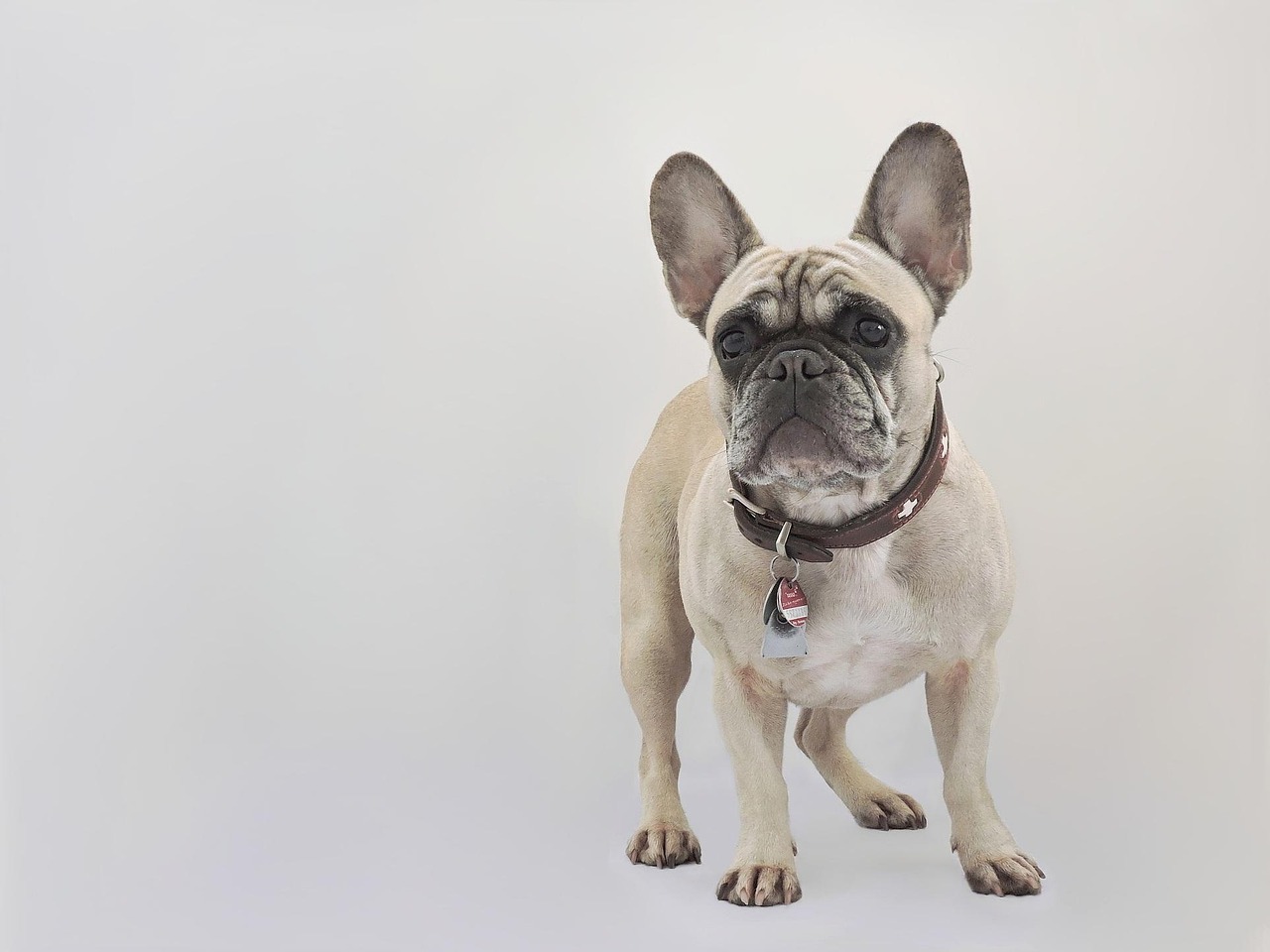
A fluffy Frenchie gets its long coat from a recessive long-hair trait, which means a puppy must inherit the trait from both parents to be fluffy — and both parents can look like ordinary, short-coated Frenchies. That single fact explains almost everything else about fluffies: why they’re rare, why they’re expensive, and why two smooth-coated dogs can produce a long-haired litter.
I own one. Her name is Clementine, she sheds like a small sheep, and she has ruined two of my black t-shirts permanently. She is also, as far as the vet is concerned, a French Bulldog — same flat face, same snoring, same stubborn streak, same heat intolerance. The coat is the only thing that’s different, and even that isn’t as different as most people assume.
What follows is the honest version of fluffy Frenchie genetics, written for people who are either living with one or about to spend real money on one.
What actually causes a fluffy coat in French Bulldogs?
A fluffy French Bulldog inherits a recessive long-hair trait from both parents. Neither parent needs to be fluffy themselves — carriers look completely normal. When two carriers are bred, some puppies in the litter inherit the trait from both sides and are born with a longer, softer coat.
This is the whole mechanism, and it’s worth sitting with for a moment, because it has practical consequences.
If you breed two fluffy Frenchies together, every puppy will be fluffy. If you breed a fluffy to a carrier, roughly half the litter tends to be fluffy. If you breed two smooth-coated carriers, you get a mostly smooth litter with the occasional fluffy surprise. Breeders who produce fluffies consistently are usually deliberately pairing carriers — which is why the trait shows up in specific lines rather than randomly across the breed.
What you won’t get from this article is a gene name, a test panel, or a percentage breakdown. Those details exist, but they’re the breeder’s and the geneticist’s territory, and half the numbers floating around Frenchie Facebook groups are wrong anyway. The version that matters to you as an owner is simple: recessive trait, both parents must carry it, carriers look normal.
Why fluffies aren’t a separate breed
No kennel club recognises “fluffy” as a breed or even a variety. A long coat sits outside the French Bulldog breed standard and is treated as a fault in the show ring — meaning a fluffy can be a perfectly healthy, well-built Frenchie and still never place at a conformation show.
This matters for two reasons. First, it means anyone advertising a “rare fluffy bloodline” as a distinct breed is either confused or selling you something. Second, it means the fluffy trait has been selected for almost entirely outside the show world, by breeders chasing demand rather than standards. That’s neither good nor bad on its own — it just tells you where the breeding decisions are being made.
Is a fluffy Frenchie less healthy than a smooth one?
No — coat length itself doesn’t change the breed’s underlying health profile. A fluffy French Bulldog faces the same risks as any other Frenchie: brachycephalic airway syndrome, heat intolerance, skin fold dermatitis, allergies, and IVDD. The long coat is cosmetic.
I want to be blunt about this because it’s the most common piece of misinformation I see. People assume fluffy equals fragile, or that the long coat somehow signals a deeper genetic problem. It doesn’t. The long-hair trait is a coat trait. It doesn’t reach into the airway, the spine, or the immune system.
What does affect a Frenchie’s health is the stuff the breed has been bred for over the last few decades:
| Health issue | What it looks like | Does coat length change it? |
|---|
—
| — |
|---|
Noisy breathing, snoring, exercise intolerance, overheating
| No |
|---|
Struggles above roughly 24°C, heavy panting, distress
| No — arguably worse with a thick coat |
|---|
Red, yeasty, smelly folds around the face and tail
| No — but fluffies trap more moisture |
|---|
Itchy paws, ears, belly; recurrent ear infections
| No |
|---|
Back pain, reluctance to jump, wobbling | No |
The genuine ethical problems in this breed are extreme size reduction and colour-chasing — breeding for the smallest possible head or the trendiest merle pattern, often at the expense of breathing and structure. Coat length is a side issue by comparison. A well-bred fluffy from health-tested parents is not inherently worse off than a well-bred smooth.
Where I’d push back is the assumption that fluffy breeders are automatically less responsible. Some are. Some aren’t. The trait being cosmetic doesn’t tell you anything about the breeder’s ethics — you have to ask about the parents’ breathing, their spines, their allergy history, and whether they’ve been health tested. [LINK: french bulldog health testing explained]
Why do fluffy Frenchies cost so much?
Fluffy Frenchies command a heavy premium because the trait is uncommon and demand outstrips supply. Pricing swings widely depending on colour, pattern, pedigree, and breeder reputation — there is no single “fluffy price,” and anyone quoting you one number as fact is guessing.
Here’s the honest range of what drives the number up or down:
- Colour and pattern. Fluffy plus a trendy colour (lilac, merle, blue, chocolate) pushes the price far higher than fluffy plus cream or fawn.
- Pedigree. Champion lines, imported lines, or lines with a reputation for producing fluffies consistently all add cost.
- Breeder reputation. Health-tested parents, transparent contracts, and a willingness to show you the parents in person cost more than a backyard breeder with a nice website.
- Rarity theatre. Some sellers inflate prices purely on the word “rare.” Rarity is real, but it’s not infinite — fluffies are uncommon, not unicorns.
- Location. Prices vary significantly by country and region.
What I’d tell a friend: the premium is real, but it isn’t a quality signal. A high price does not guarantee a healthy dog, and a lower price from a breeder who health-tests and lets you meet the parents is worth more than a higher price from someone who won’t.
If a breeder can’t or won’t tell you whether both parents carry the long-hair trait, that’s a red flag. Not because carriers are bad — they’re perfectly normal dogs — but because it means the breeder either doesn’t understand what they’re breeding or is hiding something.
What’s it actually like grooming a fluffy Frenchie?
A fluffy Frenchie needs brushing several days a week to prevent matting, sheds more than a smooth-coated Frenchie, and still requires the same daily cleaning and drying of facial folds. The coat is the easy part. The folds are the part people forget.
Clementine’s routine, honestly:
Daily (5 minutes):
- Wipe the facial folds with a damp cotton pad, dry thoroughly with a soft cloth. Moisture left in a fold is how you get dermatitis.
- Check the tail pocket if your dog has a tight one.
- Quick once-over for mats behind the ears, under the “armpits,” and around the collar line — the three spots where fluffies mat first.
Every other day (10–15 minutes):
- Brush with a slicker brush, then a metal comb to check you’ve actually reached the skin. A slicker alone will glide over the topcoat and leave mats underneath.
- Pay attention to the britches (rear leg feathering) and the chest ruff — the two areas that collect debris.
Weekly (20–30 minutes):
- Full brush-out, plus a check of the ears and paws.
- Bath only as needed — over-bathing strips oils and makes matting worse. Every 4–6 weeks is plenty for most fluffies unless they’ve rolled in something.
Seasonally:
- Expect a heavier shed in spring and autumn. This is when mats form fastest and when you’ll be vacuuming daily.
The shedding thing surprises people. A long coat doesn’t shed less — it sheds more visibly, because the hairs are longer and clump into tumbleweeds instead of vanishing into the sofa. If you can’t commit to brushing several times a week, a fluffy is the wrong choice, and that’s not a moral judgement, it’s just reality.
Heat is the other issue. A thick coat on a brachycephalic dog is a bad combination in summer. Clementine gets walked before 8am and after 8pm in July, and she has a cooling mat she treats like a throne. [LINK: french bulldog heat safety tips]
How do I choose a fluffy Frenchie breeder without getting burned?
Ask about the parents’ health first, the coat second, and the price last. A breeder who leads with colour and price is telling you what they prioritise.
Concrete questions to ask, in order:
Red flags: no health testing, no contract, pressure to pay a deposit before meeting the dog, “rare colour” as the main selling point, and any claim that fluffies are a separate breed.
Frequently Asked Questions
Can two short-haired French Bulldogs have a fluffy puppy?
Yes. If both parents carry the recessive long-hair trait but don’t express it, they can produce fluffy puppies. Carriers look like ordinary Frenchies, which is why fluffies sometimes appear unexpectedly in a litter.
Is a fluffy Frenchie a different breed?
No. A fluffy French Bulldog is a French Bulldog with a long coat. No kennel club recognises “fluffy” as a separate breed or variety, and the long coat is treated as a fault in the show ring.
Do fluffy Frenchies shed more than normal Frenchies?
They shed a similar amount of hair, but it’s longer and more visible, so it collects as tumbleweeds rather than disappearing. They also need brushing several times a week to prevent matting, which loosens and removes more loose hair.
Are fluffy Frenchies more prone to health problems?
No. Coat length doesn’t change the breed’s underlying health profile. Fluffies face the same risks as any Frenchie — airway issues, heat intolerance, skin fold dermatitis, allergies, and IVDD — and the long coat is purely cosmetic.
Related: Grooming a Siberian Cat: Complete Owner’s Guide
Related: Fluffy Frenchie Health Problems: What Owners Need to Know
Leave a Reply