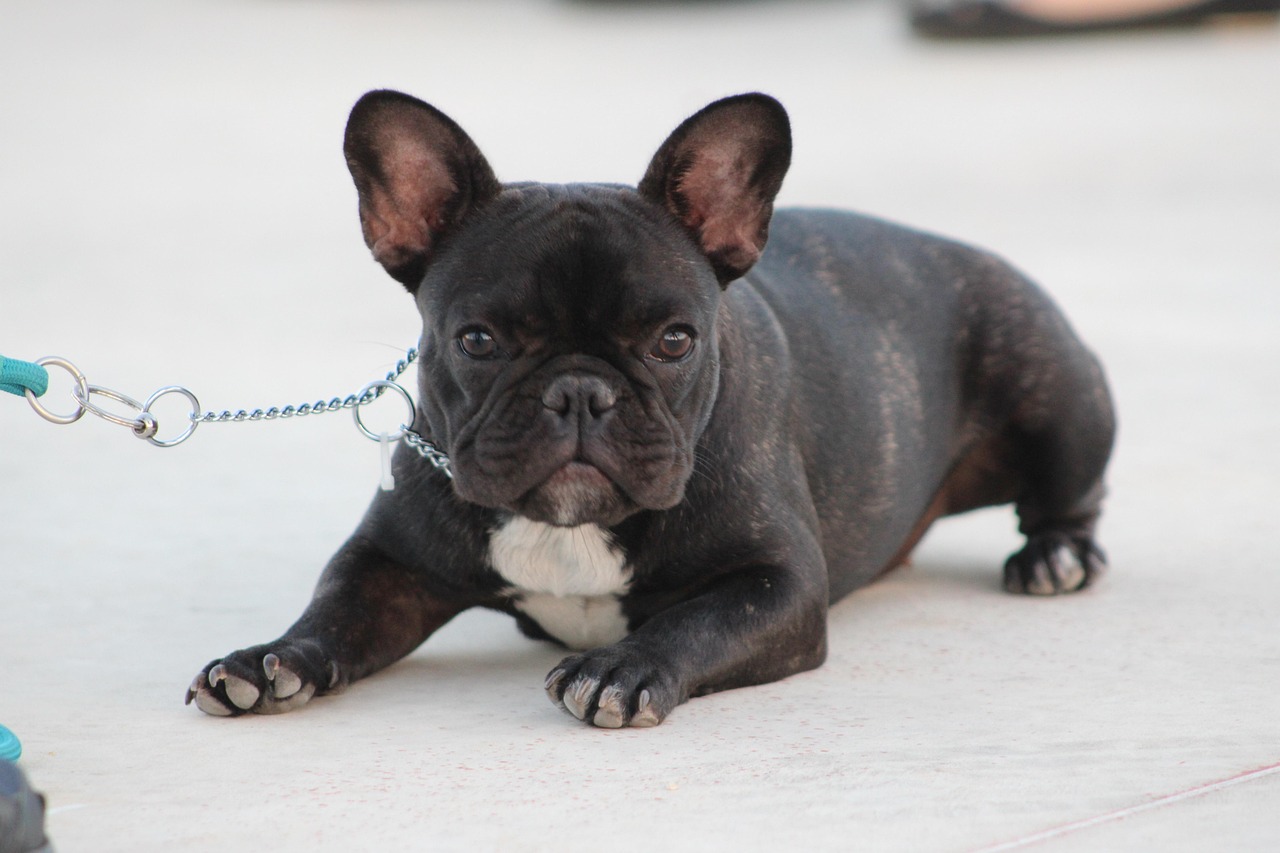
There is no such thing as a mini, pocket, micro, or teacup French Bulldog. These are marketing labels, not breed varieties or recognized sizes. The French Bulldog has one breed standard, and it calls for a dog roughly 11 to 13 inches tall at the shoulder and under 28 pounds. Anything marketed as smaller than that is either a small dog within the normal range or a deliberately under-sized dog bred for novelty — and the second category comes with serious health consequences.
If you’re shopping for a Frenchie and you’ve seen “pocket” or “micro” listings priced higher than standard litters, that price tag is not buying you a healthier or more special dog. It’s usually buying you risk.
What do “mini,” “pocket,” “micro,” and “teacup” actually mean for French Bulldogs?
They mean nothing in any official sense. No kennel club recognizes these as separate French Bulldog varieties, and no registry tracks them as distinct sizes. The terms are invented by breeders and sellers to create the impression of a rare, premium product. In practice, a “pocket Frenchie” is just a small French Bulldog — sometimes naturally small, sometimes intentionally stunted.
Here’s how the labels typically get used in the real world:
| Label | What sellers usually mean | Reality |
|---|
—
| — |
|---|
Smaller than average, often 15–20 lbs
| Not a breed variety; may just be a small standard Frenchie |
|---|
Noticeably undersized, often under 15 lbs
| Often runts marketed as premium; no health advantage |
|---|
Very small, often under 10 lbs
| Frequently the result of breeding the smallest dogs together |
|---|
Extremely small, sometimes under 6 lbs | The most extreme and highest-risk category |
The pattern is simple: the smaller the label, the higher the price and the greater the health risk. A “teacup Frenchie” is not a teacup anything — it’s a brachycephalic dog bred down to a size its airway and spine were never meant to support.
Why is “mini vs pocket Frenchie” such a confusing comparison?
Because both terms describe the same thing — an undersized French Bulldog — with no agreed definition separating them. Ask five breeders what a pocket Frenchie weighs and you’ll get five answers. Some use “mini” for dogs at the low end of the standard range, some use “pocket” for anything under 15 pounds, and some use the words interchangeably depending on which one sounds more appealing in an ad.
That inconsistency is the tell. When a category has no fixed definition, it can’t be verified, tested, or guaranteed. You have no way to know whether the puppy you’re buying is genuinely small or just young, malnourished, or the smallest of a litter being sold at a markup.
What does the actual French Bulldog breed standard say?
The standard is specific, and it’s worth knowing before you talk to any breeder. The French Bulldog should weigh under 28 pounds, with the AKC and similar bodies describing a compact, muscular, heavy-boned dog. There is no lower weight limit written into the standard, but there’s an important phrase in breed language: “the appearance of an active, intelligent, muscular dog.” A six-pound adult Frenchie cannot look muscular or heavy-boned. It looks fragile, because it is.
A healthy French Bulldog is dense and solid. Pick one up and it should feel like it weighs more than it looks. If a “micro” puppy feels light and bony, that’s not a feature.
Why are these tiny Frenchies so risky to buy?
French Bulldogs are already brachycephalic — flat-faced — which means their airways are compressed compared to a dog with a normal muzzle. That anatomy is the single biggest reason the breed struggles with heat, exercise, and anesthesia. Breeding for extreme small size makes every one of those problems worse.
A smaller Frenchie has a smaller skull, but the soft tissue inside the airway doesn’t shrink proportionally. The result is a dog with even less room to breathe. These dogs are more prone to:
- Severe brachycephalic obstructive airway syndrome (BOAS), including noisy breathing at rest, exercise intolerance, and collapse
- Difficulty regulating body temperature, making heatstroke a real danger even on mild days
- Anesthesia complications during routine procedures like spaying, neutering, or dental work
- Spinal problems, including IVDD, because a fragile frame offers less support for the breed’s already vulnerable back
- Cherry eye and skin fold infections, both more common when breeding prioritizes size over structure
There’s also the matter of how these dogs are produced. To get consistently tiny puppies, breeders often pair the smallest dogs, breed runts, or restrict nutrition during development. None of that is good for the dog. Some “micro” puppies are simply premature or underdeveloped and sold before they should leave their mother.
How can I tell if a French Bulldog puppy is genuinely healthy versus just small?
Look at the parents first, then the puppy’s overall build. A healthy Frenchie puppy — regardless of size — should have a broad chest, sturdy legs, and a solid, chunky feel. Ask to see both parents in person and ask for their weights as adults. If the breeder can’t or won’t show you the parents, that’s your answer.
Concrete things to check and ask:
If a breeder uses the words “teacup” or “micro” as a selling point, treat that as a signal about their priorities, not a feature of the dog.
What should I expect to pay, and does a higher price mean a better dog?
A higher price for a “pocket” or “micro” Frenchie does not buy you a healthier dog — it usually buys you a riskier one. Standard French Bulldog puppies from health-tested parents already cost a significant amount because of C-sections (Frenchies frequently can’t whelp naturally), small litters, and health screening. The “mini” and “micro” premium is layered on top of that for rarity, not quality.
| Type | Typical price tier | What you’re actually paying for |
|---|
—
| — |
|---|
Standard breed pricing
| Health screening, structure, temperament |
|---|
Higher than standard
| Smaller size, no health advantage |
|---|
Highest | Extreme size, elevated health risk |
Put the money you’d spend on a “rare” label toward pet insurance instead. Frenchies are prone to skin allergies, BOAS, IVDD, and eye issues, and insurance will do far more for your dog than a smaller frame ever will.
Is it ever okay to buy a small French Bulldog?
Yes — if it’s a naturally small dog within the normal range, from health-tested parents, and the breeder isn’t marketing it as a novelty size. Some Frenchies genuinely run 18 to 22 pounds as healthy adults. That’s fine. The problem isn’t small; it’s deliberately bred to be as small as possible.
If you specifically want a smaller adult dog, ask the breeder what the parents weigh and how the previous litters turned out. Honest breeders will tell you the truth, including that their dogs are on the smaller end without dressing it up as a “pocket” line.
What about exercise, heat, and care for a smaller Frenchie?
A smaller Frenchie needs the same care as any Frenchie, but with even less margin for error. Because of their flat faces, Frenchies overheat quickly and can’t handle long walks or vigorous play in warm weather. A “micro” or “teacup” Frenchie hits that wall faster and harder.
Practical routine for a small or standard Frenchie:
- Walks: Two short walks a day, 10 to 15 minutes each, in the cool parts of the morning and evening. Skip midday entirely in summer.
- Heat: Anything above roughly 80°F is risky. Keep walks to shaded grass, bring water, and watch for heavy panting, drooling, or a bluish tongue — those mean stop immediately and cool the dog down.
- Play: Short, frequent bursts indoors. Fetch down a hallway beats a long game of chase in the yard.
- Skin folds: Wipe facial folds with a vet-approved wipe every few days, and dry them thoroughly. Moisture in the folds is where infections start.
- Weight: Keep your Frenchie lean. Extra weight on a small frame puts more strain on the airway and the spine.
If your Frenchie is a “micro” or “teacup,” talk to your vet about a baseline airway assessment early. General guidance can tell you what to watch for, but only a vet who examines your dog can tell you how severe its breathing anatomy actually is — and whether surgery is needed.
The bottom line for anyone comparing mini vs pocket Frenchies
The mini vs pocket Frenchie comparison is a comparison between two marketing terms for the same thing: an undersized French Bulldog that no registry recognizes. If you want a French Bulldog, buy a French Bulldog — from a breeder who health-tests, shows you the parents, and doesn’t sell you a size label. The breed’s charm is in its personality, its solid little body, and its stubborn, food-motivated heart. None of that gets better when you shrink the dog. It only gets more fragile.
Frequently Asked Questions
Q: Is a pocket Frenchie a real breed?
No. Pocket, mini, micro, and teacup are marketing terms, not recognized breed varieties. The French Bulldog has one breed standard, calling for a dog under 28 pounds. Any “pocket” label describes an undersized Frenchie, not a separate type.
Are mini Frenchies healthier than standard Frenchies?
Generally no. Breeding for smaller size tends to worsen the breed’s existing problems, especially breathing issues, heat intolerance, and spinal weakness. A healthy Frenchie within the normal weight range is usually a safer bet than a deliberately miniaturized one.
How much should a French Bulldog weigh?
The breed standard calls for under 28 pounds as an adult, with a compact, muscular, heavy-boned build. Many healthy Frenchies land between 18 and 26 pounds. There is no official minimum weight, and dogs under 15 pounds are usually bred for size rather than health.
Why are teacup Frenchies so expensive?
The price reflects rarity marketing, not quality or health. Breeders charge more for extremely small puppies because buyers perceive them as special. In reality, these dogs often carry higher risks of airway, spinal, and anesthesia complications.
Can a tiny Frenchie live a normal life?
Some can, with careful management, but they usually need more vigilance around heat, exercise, and breathing. A vet should assess the airway early. General advice can’t replace an exam, since only your vet can judge how severe the breathing anatomy is.
What should I ask a breeder before buying a Frenchie?
Ask for both parents’ adult weights, health testing records, the puppy’s age at pickup, and vaccination history. Ask to see the parents in person. If a breeder leads with “micro” or “teacup” as a selling point, look elsewhere.
More Frenchie answers on this topic
What does “mini French Bulldog” actually mean?
“Mini French Bulldog” is a marketing label applied to Frenchies sold as smaller than average. It has no definition, no weight limit and no governing body behind it. Two breeders can use the same phrase for dogs of completely different sizes, which is exactly why the term is useless to a buyer trying to work out what they’re actually getting.
Because there’s no standard, the label does whatever the seller needs it to do on any given day. Sometimes it describes a legitimately small adult — a Frenchie that finished growing at the low end of normal. Sometimes it describes a puppy that’s small right now and will grow into a completely ordinary adult. And sometimes it describes a dog that has been bred down deliberately, which is where the real problems start.
The breed standard matters here. French Bulldogs are described as compact and muscular with a heavy, substantial build for their size — the whole point of the breed is that stocky, cobby frame. A dog bred to be dramatically lighter than that isn’t an improved Frenchie. It’s a Frenchie pushed away from its own standard.
If you want to understand what “normal” actually looks like for this breed, it’s worth reading up on [LINK: french bulldog breed standard size] before you talk to any seller.
Is there such a thing as a pocket or teacup French Bulldog?
No. “Pocket,” “micro” and “teacup” are the same marketing trick with different words. None of them describe a recognised variety, none have agreed size definitions, and none appear in any breed standard. They exist to make a small dog sound like a rare category worth paying extra for.
The “teacup” label deserves particular scepticism. It implies a dog small enough to sit in a teacup — which, in a breed that’s already flat-faced and stocky, means a dog bred so far down that breathing and joint problems become close to inevitable. A genuinely tiny French Bulldog puppy is usually not a triumph of breeding. It’s often the runt of a litter, or a puppy with a low birth weight that needed help to survive its first weeks.
That distinction matters at the point of sale. A runt can grow into a perfectly normal adult. A puppy deliberately bred for extreme smallness will stay small — and stay fragile. Sellers rarely tell you which one you’re looking at.
Why does deliberately breeding smaller Frenchies cause problems?
Because the French Bulldog’s flat face already compromises breathing, and shrinking the dog shrinks the airway too. Smaller dogs in this breed tend to have narrower airways relative to their body, more breathing difficulty, more fragile bones, more joint problems, and a harder time under anaesthesia. Low birth weight and “runting” in the litter are common when breeders chase size.
Let me be specific about what that looks like day to day, because “breathing difficulty” is abstract until you live with it:
- Exercise intolerance. A normal Frenchie already struggles in heat. A bred-down one can struggle on a mild day after ten minutes.
- Noise. Snoring, snorting, reverse sneezing and wheezing during sleep are common in the breed, but they’re louder and more frequent in undersized dogs.
- Heat sensitivity. Flat-faced dogs cool themselves badly. Smaller body mass doesn’t fix that — it can make overheating come on faster because there’s less dog to buffer the temperature swing.
- Anaesthesia risk. Any vet putting a Frenchie under needs to manage the airway carefully. In an undersized dog with a narrow airway, that risk goes up, and some clinics will want extra monitoring or refer you to a specialist.
- Bone and joint fragility. Thin, light-boned dogs in a breed built to be sturdy are more prone to fractures and joint issues, especially jumping off furniture.
- Dental crowding. Smaller jaws with the same number of teeth means overcrowding, retained baby teeth and more cleaning.
None of this is guaranteed in every small Frenchie. Plenty of naturally small adults live normal, comfortable lives. But the risk profile shifts when size is the goal rather than a side effect.
What should I check before buying a “mini” Frenchie?
Get the adult weight of both parents, the puppy’s own weight curve over several weeks, and proof of health testing — breathing/BOAS, spine and hips at minimum. Ask for these in writing. A seller who can’t or won’t provide them is telling you something important, and it isn’t good.
Here’s a practical checklist you can run through in order:
| Check | What to ask for | Red flag |
|---|
—
| — |
|---|
Actual adult weights of both parents, not estimates
| “They’re small” with no numbers |
|---|
Weekly weights from birth, or at least several data points
| Only the current weight |
|---|
BOAS or equivalent airway assessment on parents
| “He breathes fine” as the only answer |
|---|
Screening or vet notes on parents
| No records at all |
|---|
Hip scoring on parents
| “Never had a problem” |
|---|
Any runts, C-sections, losses
| Evasiveness |
|---|
Written health terms and return policy | Cash only, no paperwork |
Two things worth adding. First, Frenchies are stubborn and food-motivated — that’s breed character, not a size issue, and it means training a small Frenchie is exactly as much work as training a big one. Don’t let anyone tell you a “mini” is easier. Second, ask to see the mother with the litter. A breeder who won’t let you meet the dam is hiding something.
Does “mini” cost more, and is it worth it?
Usually yes, it costs more — and no, the premium isn’t justified by anything medical. The “mini” label exists largely to justify charging more for the same dog. Pricing varies enormously by region, breeder and demand, so treat any single figure you see online as one seller’s number, not the market rate.
The word doing the heavy lifting in these listings is “rare.” Rare sounds like value. In this case it means “uncommon because most responsible breeders don’t do it.” You’re not paying for a superior dog. You’re paying a markup for a label, and often accepting a higher lifetime risk of breathing, joint and anaesthesia complications on top.
There’s a second cost most buyers don’t price in: insurance. Many insurers ask about your dog’s size and any breed variant on the application, and extra-small dogs can attract higher premiums or exclusions. Vet bills for airway surgery, joint treatment or emergency overheating episodes are not small. If you’re budgeting, budget for the dog and the possible complications.
What’s the honest alternative if I want a small Frenchie?
Buy a normal French Bulldog from a breeder who health-tests, and accept whatever size that dog turns out to be. If you specifically want a smaller adult, ask about the parents’ weights and look at dogs at the lower end of the normal range — that’s a naturally small Frenchie, and it’s the only version of “small” that doesn’t come with a manufactured risk.
The practical steps:
If your puppy is already home and you’re worried about breathing, exercise tolerance or how they’ll handle anaesthesia for a future procedure, that’s a conversation for your vet — specifically about airway assessment and whether a referral to a specialist is warranted. This article is general guidance, not medical advice, and it can’t assess your individual dog.
Leave a Reply