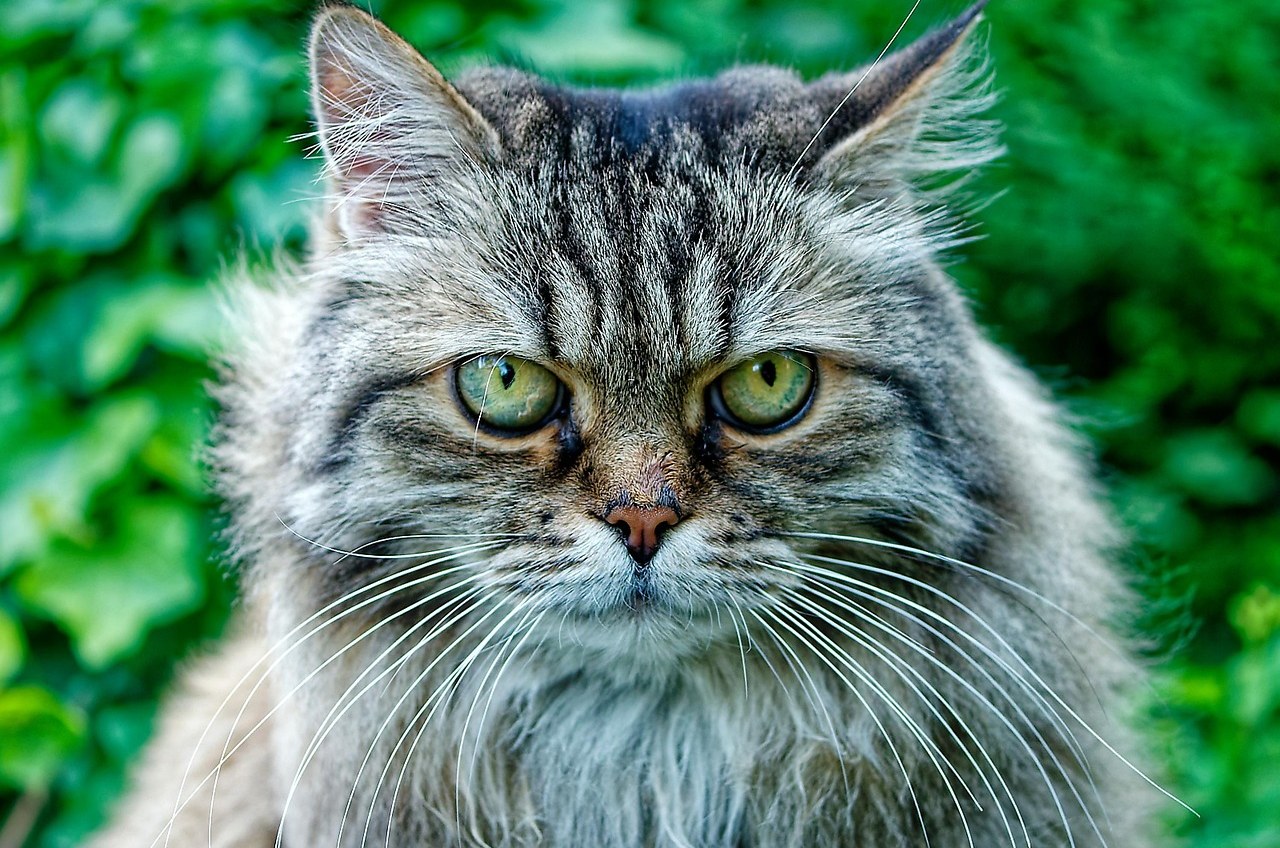
Siberian cat hip dysplasia is a developmental condition in which the ball of the hip joint does not sit properly in its socket, causing looseness, wear, and eventually arthritis. It is less common in Siberians than in some other breeds, but it is recognised in the breed, and because Siberians are large cats that keep growing for years, joint problems can affect them differently than they would a smaller cat. If your Siberian is stiff, reluctant to jump, or suddenly avoiding the high perches they used to claim, hip dysplasia belongs on the list of possibilities your vet should assess.
What Exactly Is Hip Dysplasia in a Siberian Cat?
Hip dysplasia means the femoral head and the acetabulum — the ball and socket of the hip — fit together poorly. The joint is unstable, the cartilage wears unevenly, and over time the body lays down scar tissue and new bone in an attempt to stabilise what it cannot fix. The result is pain and reduced range of motion.
In Siberians specifically, two breed traits shape how this plays out. First, they are heavy. A mature male often sits between 5 and 9 kg, and that weight travels through the hip every time he launches onto a cat tree. Second, they are slow to mature, sometimes taking three to five years to reach full size. A growing Siberian skeleton is under load for a long time, which is exactly the window in which a loose hip does the most cumulative damage.
It is worth separating two ideas. Hip dysplasia is the structural problem. Osteoarthritis is the painful consequence that develops later. A cat can have a mildly dysplastic hip and show almost nothing for years, then become obviously uncomfortable in middle age.
How Common Is Hip Dysplasia in Siberian Cats?
Hip dysplasia in Siberian cats is considered uncommon compared with its frequency in some other pedigree breeds, but it does occur, and it is one of the orthopaedic conditions breeders are advised to screen for. Because mildly affected cats often show no signs, the true rate is hard to pin down — many cats simply never get radiographed.
What matters more than a prevalence figure is your cat’s individual situation. A Siberian with a known dysplastic parent, a cat that was overweight through adolescence, or one that has always moved a little stiffly behind is a cat worth investigating. Breeders who screen their breeding cats and can show you the results are doing the single most useful thing available for reducing the condition in the breed.
What Does Hip Dysplasia Look Like in a Siberian?
The signs are easy to miss in a cat, because cats hide discomfort and because Siberians are famously stoic about handling. Owners often notice behaviour changes before they notice limping.
Watch for:
- Reluctance to jump or climb. This is a big one for Siberians, who are athletic climbers by nature. A Siberian that stops using the top of the cat tree is telling you something.
- Jumping down in stages rather than landing cleanly from height.
- Stiffness after rest, especially after sleeping, that eases once the cat moves around.
- A swaying or waddling gait in the hindquarters when walking away from you.
- Reduced grooming of the rear end and back legs — a semi-longhaired coat plus a painful hip is a recipe for a matted, unkempt rear.
- Irritability when handled around the hips or hind legs, which stands out in a breed that normally tolerates handling well.
- Muscle loss over the thighs, visible as a narrower, bonier back end.
- Less interest in interactive play — the fetching and chasing games Siberians usually love.
Because this breed is so people-oriented and interactive, a drop in engagement is often the first clue. A Siberian that stops following you from room to room and starts spending the day on the floor instead of a shelf is worth a vet visit.
How Is Hip Dysplasia Diagnosed?
Diagnosis is by radiograph, and the positioning matters. Your vet will typically take a ventrodorsal hip-extended view, and sometimes additional views to assess looseness under stress. In some cases referral to a specialist for a more detailed assessment, or for advanced imaging, is worthwhile.
Two things are commonly confused:
- Hip dysplasia — the structural looseness and poor fit, visible on the radiograph.
- Osteoarthritis — the secondary joint damage, which may be visible on the radiograph as new bone around the joint, or may be inferred from the cat’s comfort and mobility.
A diagnosis of dysplasia does not automatically mean your cat is in pain. Some dysplastic cats are comfortable for years. The radiograph tells you about structure; your cat’s behaviour tells you about pain. You need both pieces of information to make good decisions.
Screening and Breeding: What the Results Actually Mean
Screening is done by radiograph, usually once the cat is skeletally mature enough for the result to be meaningful — for a slow-maturing breed like the Siberian, that is generally later than you might expect. Results are graded on a scale from normal through increasing degrees of looseness and change.
| What you’re looking at | What it tells you |
|---|
—|
| Hip radiograph of the breeding cat | Whether that individual’s hips are structurally sound |
|---|
Reduces, but does not eliminate, risk in kittens |
| Grandparents and siblings screened | Gives a fuller picture of the lines behind your cat |
|---|
You are guessing |
A few honest caveats. Screening reduces risk; it does not guarantee a sound kitten, because hip dysplasia is influenced by more than one gene plus environmental factors like growth rate and body condition. And a cat with excellent hips can still produce an affected kitten if paired with the wrong mate. If you are buying a Siberian, asking to see screening results for both parents is reasonable and expected. A breeder who dismisses the question is a breeder worth pausing over.
Can Hip Dysplasia Be Prevented?
You cannot change the genes your cat was born with, but you can influence how much load those hips carry during growth and through adult life. For a breed that grows for three to five years and can reach 9 kg, this is not a trivial point.
Practical steps for Siberian owners:
How Is Hip Dysplasia Managed in a Siberian Cat?
Management is usually layered, and it is tailored to how much pain and functional loss your cat actually has — not to how the radiograph looks.
- Weight management. The most effective single intervention. Every gram of excess weight is load through the hip.
- Environmental modification. Ramps, steps, low-sided litter trays, warmed beds, and easy access to favourite perches. Keep the cat tree, but make the route up gentler.
- Pain relief. Your vet may prescribe non-steroidal anti-inflammatory medication, or other analgesics. Cats metabolise many drugs differently from other species, so never use a human painkiller — paracetamol and ibuprofen are toxic to cats.
- Joint support. Glucosamine, chondroitin, omega-3 fatty acids, and similar supplements are widely used. Evidence in cats is limited, but many owners report benefit and the risk is generally low. Discuss products with your vet rather than self-prescribing.
- Physiotherapy and controlled exercise. A veterinary physiotherapist can give you a home programme. This is genuinely useful and often underused in cats.
- Grooming support. Because Siberians carry a dense triple coat, a cat with a painful hip will struggle to groom the rear. You will need to take over. Book more frequent brushing sessions and check for mats behind the back legs and under the tail.
- Surgery. In severe cases, options such as femoral head and neck excision exist. This is a specialist decision and depends on the individual cat’s age, weight, and degree of change.
If your cat’s comfort is not adequately controlled with the basics, ask for referral to a veterinary orthopaedic specialist or a feline medicine specialist. General guidance can only take you so far here — the right drug, dose, and combination for your individual cat needs a vet who has examined them.
The Breed Context: Why This Matters More Than It Might Seem
Siberians already carry a known cardiac concern in hypertrophic cardiomyopathy, with an identified MYBPC3 gene variant and screening by echocardiogram. Other breed-relevant health areas include polycystic kidney disease, dental disease, and hip dysplasia. That is a manageable list, but it means an owner’s job is not just to react to problems — it is to screen, monitor, and keep the cat in good body condition.
There is also a temperament angle that cuts both ways. Siberians tolerate handling well, follow their people around, and often learn to fetch. That makes them delightful to live with and, unfortunately, good at masking discomfort. A cat that will let you handle it without complaint is a cat that may not tell you its hip hurts. You have to watch the behaviour, not wait for a yowl.
And one more breed-specific note: because Siberians need vertical territory and are athletic climbers, hip dysplasia hits them harder than it would a cat content to live at floor level. Your cat’s whole environmental design — the cat trees, the shelves, the high perches — depends on a functional hip. Adapting that environment early is one of the most valuable things you can do.
If you are choosing a Siberian, ask about hip screening alongside the cardiac screening. If you already live with one, keep them lean, keep them moving, and get stiffness checked rather than explained away as “just getting older.” Siberians are long-lived, slow-maturing cats, and a hip that is managed well in year four is a hip that still works in year fourteen.
Frequently Asked Questions
Q: Is hip dysplasia common in Siberian cats?
It is less common in Siberians than in some other breeds, but it is recognised in the breed and is one of the orthopaedic conditions breeders are advised to screen for. Because mildly affected cats often show no signs, many cases are never diagnosed, so the true rate is difficult to establish.
What are the first signs of hip dysplasia in a Siberian cat?
Owners often notice behaviour changes before limping. A Siberian that stops jumping onto high perches, jumps down in stages, moves stiffly after resting, or becomes irritable when handled around the hips is worth a vet visit. Reduced interest in interactive play is another early clue in this breed.
Can hip dysplasia in Siberian cats be cured?
No. The structural looseness cannot be reversed, but the pain and functional loss can usually be managed well with weight control, environmental changes like ramps, prescribed pain relief, joint support, and physiotherapy. Severe cases may be referred to a specialist to discuss surgical options.
Should I avoid buying a Siberian kitten if the parents aren’t hip screened?
Screening reduces risk but does not eliminate it, since hip dysplasia involves multiple genes plus environmental factors. Unscreened parents are not a guarantee of a problem, but asking to see hip and cardiac screening results for both parents is a reasonable expectation when buying a Siberian.
Does carrying extra weight make hip dysplasia worse in Siberian cats?
Yes. Siberians are a large breed, with males often reaching 5 to 9 kg, and every extra gram travels through the hip joint. Keeping your cat lean is the single most effective thing you can do to slow the progression of joint wear and reduce discomfort.
Leave a Reply